Care
Feeding a flowerhorn
A flowerhorn will eat whatever you give it and beg for more. Good feeding is less about finding a miracle food and more about a quality pellet, some variety and the discipline to stop.
The staple: a quality pellet
Flowerhorns are omnivores that lean heavily toward protein. In the wild their cichlid ancestors eat insects, crustaceans, small fish and some plant matter. In the tank, the simplest way to cover all of that is a pellet made for flowerhorns or large cichlids, used as the base of every week’s diet.
What to look for on the bag:
- Protein around 40 to 50 percent. Most dedicated flowerhorn pellets fall in this range. Whole fish, krill or shrimp meal near the top of the ingredient list is a good sign.
- Pigment sources such as astaxanthin, spirulina or krill if you keep red or orange strains. More on what these can and can’t do below.
- The right size. A pellet the fish can take in one bite without struggling. Juveniles need small or crushed pellets.
- Freshness. Vitamins break down after a bag is opened. Buy an amount you will use within a few months, keep it sealed, cool and dry, and never store it on top of a warm light or hood.
Floating pellets let you see exactly how much gets eaten, which makes it easier to avoid leftovers. Sinking pellets suit shy or newly arrived fish that won’t come to the surface yet.
How often to feed, by age
Young flowerhorns grow fast and need frequent small meals. As a fish approaches adult size, growth slows and so should the feeding. These are typical ranges; individual fish and water temperature shift them.
| Stage | Meals per day | What to feed |
|---|---|---|
| Fry and small juveniles, under 3 in (8 cm) | 3–4 small meals | Crushed or mini pellets, baby brine shrimp for the smallest fry |
| Juveniles, 3–6 in (8–15 cm) | 2–3 meals | High-protein small pellets, occasional frozen foods |
| Subadults, 6–8 in (15–20 cm) | 2–3 meals | Adult-size pellets plus treats a few times a week |
| Adults, over 8 in (20 cm) | 1–2 meals | Staple pellets, treats in place of a meal 2–3 times a week |
How much per meal: what the fish finishes in about one to two minutes. References range from 30 seconds to five minutes, which tells you the rule is about stopping before there are leftovers, not about a stopwatch. A practical method is to count pellets, feed that many, and adjust up or down until nothing is left behind.
Many keepers give adults one day a week without food. It gives the digestive system a rest and costs a healthy fish nothing. Skip fasting for small juveniles, which need steady meals to grow.
Temperature changes appetite too. A tank near 82°F (28°C) supports normal feeding. If the water runs cooler, digestion slows and the fish should get less. The water and temperature guide explains why.
Treats and variety
Treats keep a flowerhorn interested and add nutrients a single pellet can miss. Use them in place of a pellet meal, not on top of one.
Good treats
- Frozen mysis shrimp, brine shrimp and krill
- Raw or cooked shelled shrimp, cut to bite size
- Earthworms from a clean, pesticide-free source
- Gut-loaded crickets and mealworms, in moderation
- Blanched, shelled peas or a little blanched spinach
Handle with care
- Freeze-dried foods: soak them first so they don’t swell in the gut
- Bloodworms: popular, but some keepers avoid them over parasite and quality concerns
- Dried shrimp: fine as an occasional snack, not a staple
- Anything fatty or fed in large chunks
Green foods deserve a mention. WetWebMedia’s Neale Monks, writing about flowerhorn and parrot cichlid health, recommends occasional cooked peas and spinach because constipation is a common problem in these fish. Hand-feeding treats is also one of the best ways to build a bond, as covered in the flowerhorn as a pet.
What not to feed
- Live feeder fish. Feeder goldfish and minnows are a common way to bring parasites and bacterial disease into a tank. Neale Monks also warns that they carry high fat and thiaminase, an enzyme that breaks down vitamin B1, linked to long-term health problems.
- Mammal and poultry meat. Beef heart and chicken were once common cichlid foods. Their fats are hard for fish to digest, and most keepers now avoid them or use them rarely.
- Human leftovers. Bread, rice, cooked meats and seasoned food foul the water and offer little a fish can use.
- Old or damp food. Pellets that smell off, clump or have been open for many months have lost nutrients and can grow mold.
Color foods and kok foods: what they can and can’t do
Walk the flowerhorn aisle and you will find foods promising redder color and bigger heads. Some of that is real and some is marketing.
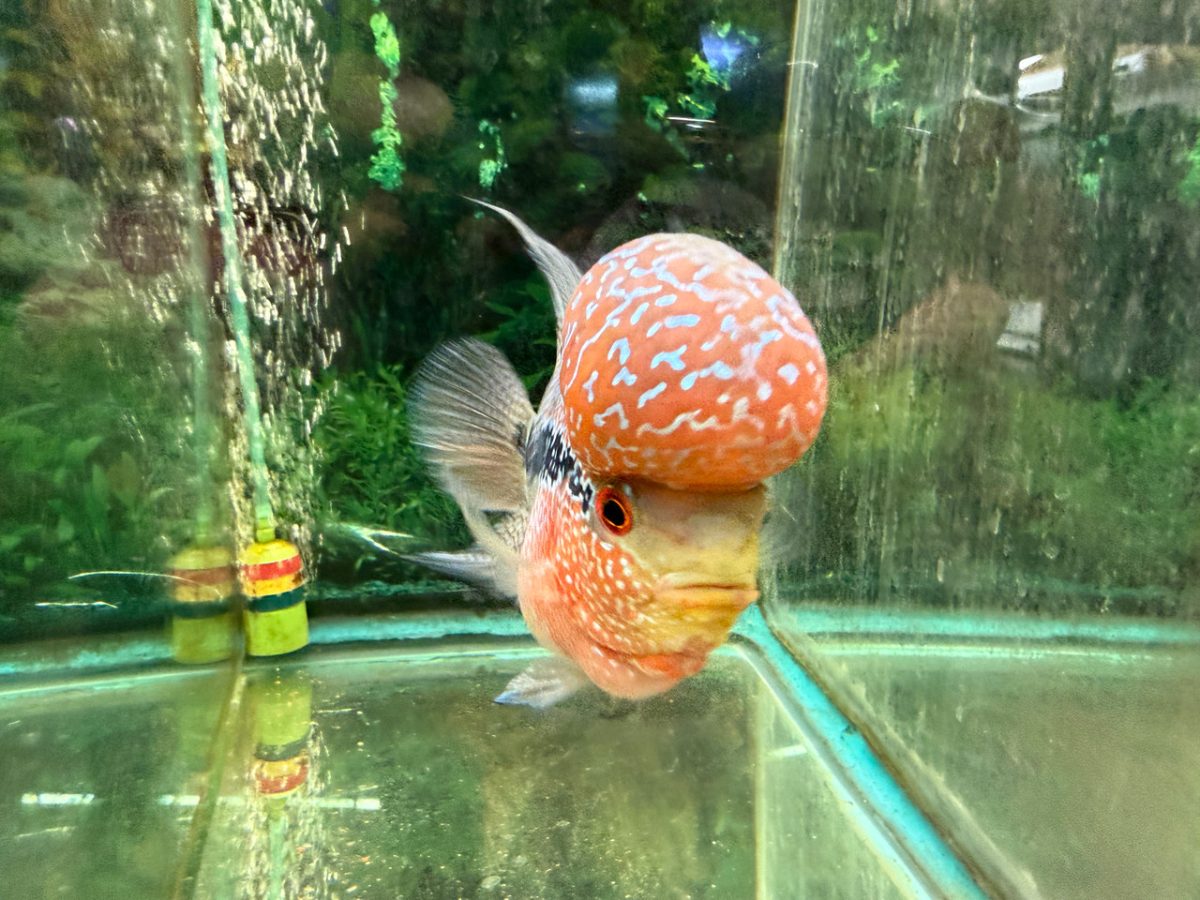
Color foods work within limits. Fish can’t make red and orange pigments themselves, so carotenoids such as astaxanthin in the diet are what let those colors show. A red strain on a pigment-rich food will usually look deeper than the same fish on a plain diet. What color food can’t do is create color the fish doesn’t carry genetically, and if you stop feeding it, the color gradually settles back.
Kok foods are mostly high-protein foods. The kok develops according to genetics, and a good diet, clean warm water and low stress help a fish reach its potential. We don’t know of reliable evidence that any particular pellet or supplement grows a kok beyond that. Growing the head, and why some shrink, is its own topic in the kok growth guide.
Be wary of juveniles with unnaturally intense color. Buyers have long been warned that young fish can be pushed with color feeds and, some claim, hormone-laced foods before sale. That color may fade once the fish is on a normal diet. Buying from a seller who will tell you what the fish has been fed avoids the surprise. Our own fish and the foods we use are available at flowerhorn.co.
Overfeeding, bloat and a fish that won’t eat
More flowerhorns are harmed by too much food than too little. Extra food rots, drives up ammonia and nitrate, and puts strain on the fish’s digestion. Signs you are overfeeding:
- Pellets left on the bottom after a few minutes
- Cloudy water or nitrate climbing faster than usual
- A swollen belly, long trailing feces, or white stringy waste
- A fish that struggles to hold its position or floats awkwardly after meals
If you see these, cut back, fast the fish for a day or two, and offer a blanched shelled pea afterward. Short-body strains are especially prone to swim bladder and bloating trouble and are best fed small, frequent meals. Persistent bloating, white feces or refusing food are covered in the diseases guide.
A fish that suddenly stops eating is usually telling you something about its surroundings. Test the water first, check the temperature, and think about recent changes such as a move, new decor or a reflection it is fighting. A newly arrived flowerhorn commonly skips food for a few days while it settles. A healthy adult can go several days without eating, so most keepers skip vacation feeder blocks, which can foul the water, and simply feed well before and after a short trip.
For the rest of the routine, go back to the flowerhorn care guide.
Questions about feeding flowerhorns
How often should I feed my flowerhorn?
Adults do well on one or two meals a day, juveniles on two or three, and small fry on three or four. Feed only what the fish eats in a minute or two.
What is the best food for a flowerhorn?
A quality flowerhorn or cichlid pellet with roughly 40 to 50 percent protein, rotated between a couple of brands, with frozen shrimp, krill or mysis a few times a week.
Can flowerhorns eat feeder fish?
It is best to avoid them. Feeder goldfish and minnows can carry parasites and disease, and they are high in fat and thiaminase, which can cause long-term health problems.
What food makes a flowerhorn’s kok grow?
No food creates a kok. Genetics set its potential, and a high-protein diet, clean warm water and low stress help a fish reach it.
How long can a flowerhorn go without food?
A healthy adult can usually go several days without eating. Juveniles need more regular meals, so arrange a sitter for longer trips.
Sources
- Flowerhorn Diet: What to Feed Your Flowerhorn Cichlids, Pet Zone Tropical Fish
- Why is your Flowerhorn or Parrot Cichlid Sick?, Neale Monks, WetWebMedia
- General Care: Feeding Guide, Grooming and Growth, Vincenzo’s Aquatics
- How to Feed Your Aquarium Flowerhorn Cichlids the Right Way, Intan Growel
- How to Care for Flowerhorn Cichlids, AquariumLab
- Flowerhorn Cichlid Care, FishLore