San Diego
Keeping and buying a flowerhorn in San Diego
San Diego is easy country for a flowerhorn. The tap water is already hard and alkaline, and the climate rarely fights your heater. Here is what to check anyway.
What San Diego tap water means for a flowerhorn
Flowerhorns carry Central American cichlid blood, and those fish live in warm, moderately hard, slightly alkaline water. San Diego hands you that for free: most local keepers fill from the tap, treat it, and never touch a pH bottle. The City of San Diego’s 2024 Annual Drinking Water Quality Report breaks results out by treatment plant.
| Total hardness | Plant averages 216 to 230 ppm as calcium carbonate (12.6 to 13.4 grains per gallon). Full range 172 to 248 ppm, roughly 10 to 14 dGH. |
|---|---|
| Alkalinity | Plant averages 110 to 123 ppm, roughly 6 to 7 dKH. |
| pH | Plant averages 8.12 to 8.31. Range 7.28 to 8.76. |
| Total dissolved solids | Plant averages 479 to 571 ppm. Range 367 to 614 ppm. |
| Chloramine residual | Distribution average 1.73 ppm, up to 3.80 ppm. |
Line those up against our water and temperature page and the picture is good. Hardness of 10 to 14 dGH sits inside the 8 to 20 dGH a flowerhorn likes, and 6 to 7 dKH buffers pH against crashing between water changes. Only pH runs slightly above our stated 7.0 to 8.0, and that is not worth fixing. A fish in stable water at 8.2 is healthy; the same fish bounced around by pH-down is not.
The numbers also move, which is the part newcomers miss. Most of the supply is imported through the San Diego County Water Authority as a blend of Colorado River and State Water Project water, with Carlsbad desalination in the mix, and the proportions shift with rainfall and demand. Water the city buys already treated ranged from 60.4 to 243 ppm hardness in 2024, and the city’s own water quality page quotes a typical figure nearer 16 grains per gallon (276 ppm), varying by demand and neighborhood. Buy a GH and KH kit and test your own tap twice a year.
Chloramine is the one thing you must handle. San Diego disinfects with chloramine rather than free chlorine. Free chlorine gasses off if a bucket stands overnight; chloramine does not, and aerating will not remove it. Use a conditioner whose label says it neutralizes chloramine (most modern ones do) and dose the full volume of new water every time, including top-offs. Breaking the chloramine bond releases ammonia, so a conditioner that detoxifies ammonia too is sensible on a big change. The city’s water quality FAQ says it plainly: the disinfectants used to treat the water are harmful to fish. Ammonia burn from an untreated fill mimics several things on our disease page, and it is entirely avoidable.
Heaters, the marine layer and inland summers
Our range is 80 to 86°F (27 to 30°C). San Diego makes that easy to hold, not automatic.
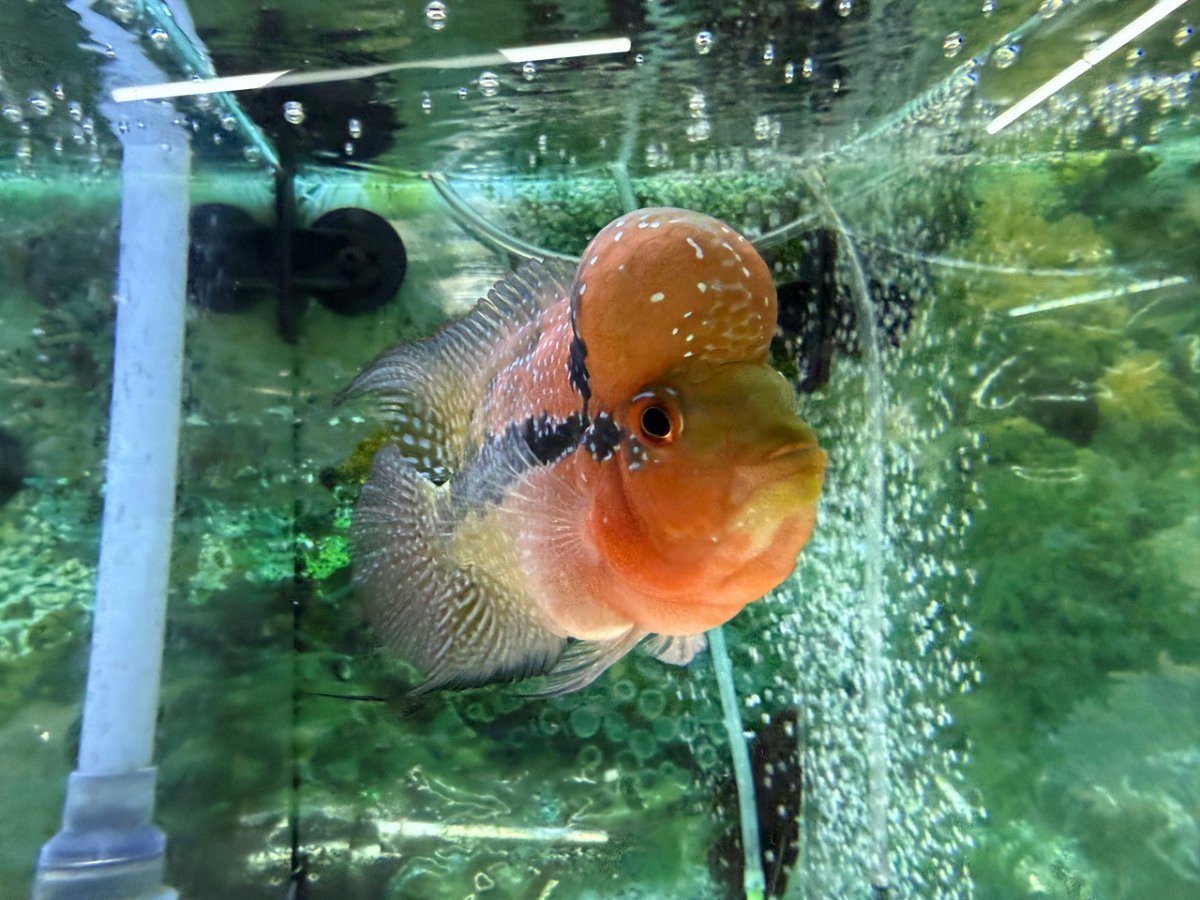
Coastal winters are mild outdoors and cooler indoors than people expect. Plenty of older apartments and beach-area houses have minimal heating and are not heated at night, so a living room sits in the low 60s°F from December through March. That is a 20°F gap for your heater to close, continuously.
Heater wattage is about that gap, not the target by itself. Our rule is 3 to 5 watts per gallon split across two heaters: in an unheated room take the upper end, and two units mean a stuck-off heater is an inconvenience rather than a dead fish. On a 75 gallon tank that is roughly 225 to 375 watts. The tank calculator sizes it for your volume, and the tank setup guide covers placement.
Garages and unheated back rooms are where local keepers get caught. A San Diego garage tracks outside air far more closely than the house does: cold enough in January to run a heater flat out, hot enough in August to make it irrelevant. Insulate the stand, put the heaters on a controller with an alarm, and check the temperature every morning for the first month.
Summer is the opposite problem. Inland valleys regularly see highs in the upper 90s, and many coastal homes have no air conditioning because they normally do not need it. A closed-up room during a September heat event can push a tank past 86°F, and warm water holds less oxygen just when the fish needs more. What works, in order: lights off during the hottest hours, a clip fan across the surface with the lid cracked (usually worth 2 to 4°F), and extra aeration. Frozen bottles swing the temperature, so treat them as a last resort. Condition every top-off.
Where to see flowerhorns in person
Photographs do not tell you how a flowerhorn carries itself. Seeing one work the front glass and flare at your hand is what usually decides people.
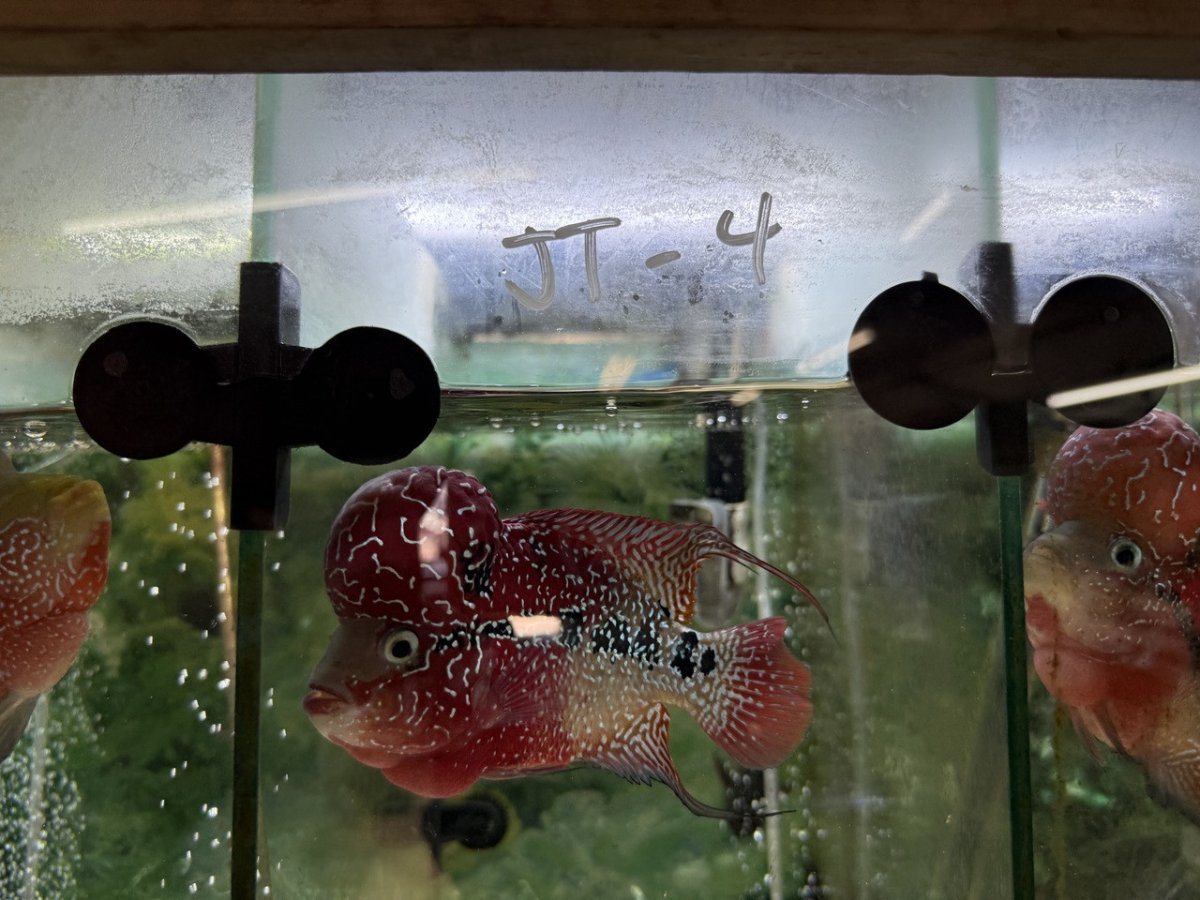
This site is published by Pet Zone Tropical Fish, so take what follows for what it is: where we are. The two stores are not interchangeable.
| Store | Pet Zone Mid-City | Pet Zone Convoy |
|---|---|---|
| Address | 4266 University Ave, San Diego, CA 92105 | 4160 Convoy St, San Diego, CA 92111 |
| Phone | (619) 283-1812 | (858) 987-0309 |
| What it is | Monster fish and koi store. Where Pet Zone started in 2007, and where the flowerhorns are. | Aquascaping store. |
| Hours | Monday closed. Tuesday to Friday 10:30am to 6:00pm. Saturday 11:00am to 6:00pm. Sunday 11:00am to 4:00pm. | Open seven days a week, 10:00am to 6:00pm. |
To look at flowerhorns, go to Mid-City on University Avenue; Convoy is the planted and aquascaping side. Current stock is on the Pet Zone flowerhorn page, and directions for both stores are on the contact and location page.
One thing worth knowing before you call: online and phone orders are handled by the sales team, not the store floor. That line is 1-866-MY-FISHY ext. 1 or (858) 302-2060, or email help@petzonesd.com.
Any shop visit is also a chance to see a properly housed flowerhorn: one fish per space, no tank mates. Our tank mates page explains why that is the rule rather than a preference.
Buying locally versus having one shipped
Both work, and they fail differently. The general version is in our buying guide; this is the San Diego part.
Buying in person
- Ask for the fish to be fed while you watch. One that ignores food will not improve in your car.
- Ask how long it has been in the store and what it eats, including any color food.
- Check the head for pitting, eyes for cloudiness and fins for fraying.
- Put your hand near the glass. You want a fish that comes at you, not one sulking in a back corner.
- Drive straight home. Summer traffic plus a bag on a back seat is a real risk: bring a cooler, keep the bag dark, skip the errands. Even a 30 minute drive deserves a temperature match.
Having one shipped
- Far more choice. If you want a specific strain, grade or size, a local shelf may not have it.
- Insist on dated photos or video of the exact fish and a written live arrival guarantee.
- Ask what day it ships, by what service, and whether it sits at a facility over a weekend.
- Our own fish ship nationwide from flowerhorn.co, the same stock you would see at Mid-City.
- Read shipping and acclimation before the box arrives, not after.
- A San Diego seller shipping to a San Diego address means a short hop and an easy conversation if something goes wrong.
Either way, have the tank cycled and at temperature before you buy.
Clubs and community
San Diego has a real aquarium club scene, and it is worth using. Club people have kept fish through power cuts, heat waves and moves.
The San Diego Tropical Fish Society is the general freshwater club. Public meetings are on the second Sunday of each month at 6pm in Room 101 of the Casa del Prado in Balboa Park, and the club says guests thinking about joining are welcome. It runs shows and auctions through the year. It is broad-interest rather than a cichlid group, so expect plants and goldfish alongside the big fish.
The Koi Club of San Diego is the pond side, and its annual show at the Del Mar Fairgrounds is the big one on the local calendar. A flowerhorn is not a koi, but the overlap is real: large-fish filtration, pond-grade equipment and people who think in hundreds of gallons. Our Mid-City store is a monster fish and koi store for the same reason.
Schedules and show dates change, so check a club’s own site before driving across the county. Local fishkeeping groups on social platforms are active too. Treat private sales there with the caution our buying guide applies to any marketplace listing.
If you can no longer keep your flowerhorn
People move, tanks break, and a 10 inch fish needing 75 gallons is not a small thing to hand off.
Do not release it. Not into a pond, a lake, a creek, a storm drain or the bay. The California Department of Fish and Wildlife asks people not to let aquarium pets loose, calling it inhumane and harmful, because released animals can displace native species. For the fish it is a slow death: a tropical hybrid in a San Diego waterway faces cold winter water and no food it recognizes. Flushing is no better.
Call a local fish store first
Phone before you load the fish into the car. Ask whether they take surrenders, in what condition and when to bring it. Stores that handle large cichlids are likeliest to say yes, but no one can promise space on the day.
Ask the clubs and local groups
Post in a San Diego fishkeeping group or raise it at a club meeting. Large cichlids move quickly among people who already own a big enough tank.
Offer the tank with the fish
The biggest barrier is that the new keeper needs 75 gallons standing empty. Passing on the whole setup makes an adopter out of someone who would otherwise decline.
Be honest about the fish
Give its real size, age if you know it, what it eats, whether it bites and any health history. A flowerhorn rehomed with accurate information stays rehomed.
Taking one in? A fish that has moved house needs the same quiet settling-in period as one out of a box, covered on our acclimation page.
Questions from San Diego keepers
Is San Diego tap water good for flowerhorns?
Yes, and it is one of the easier tap supplies in the country for this fish. Hardness of roughly 10 to 14 dGH and pH around 8 suit a flowerhorn well. Treat for chloramine and you are done.
Do I need RO water or a water softener for a flowerhorn here?
No. Reverse osmosis water is too soft to use unremineralized, and a household softener swaps calcium and magnesium for sodium. Use dechlorinated tap.
Does a flowerhorn need a heater in San Diego?
Yes. Coastal rooms often sit in the low 60s°F overnight in winter, well below the 80 to 86°F range. Plan on 3 to 5 watts per gallon split across two heaters.
Where can I see flowerhorns in person in San Diego?
Pet Zone Mid-City at 4266 University Ave keeps them; the Convoy store is the aquascaping side. Call (619) 283-1812 to check stock before driving over.
Sources
- Annual Drinking Water Quality Report 2024, City of San Diego Public Utilities Department
- Water Quality, City of San Diego Public Utilities Department
- Frequently Asked Questions About Your Water Quality, City of San Diego
- Schedule of Events 2026, Koi Club of San Diego
- General Meeting, San Diego Tropical Fish Society
- Don’t Let It Loose, California Department of Fish and Wildlife