Care
Flowerhorn tank mates
After tank size, the question we hear most is what can live with a flowerhorn. The short answer is usually nothing. Here is why, and what keepers do instead.
Why flowerhorns are kept alone
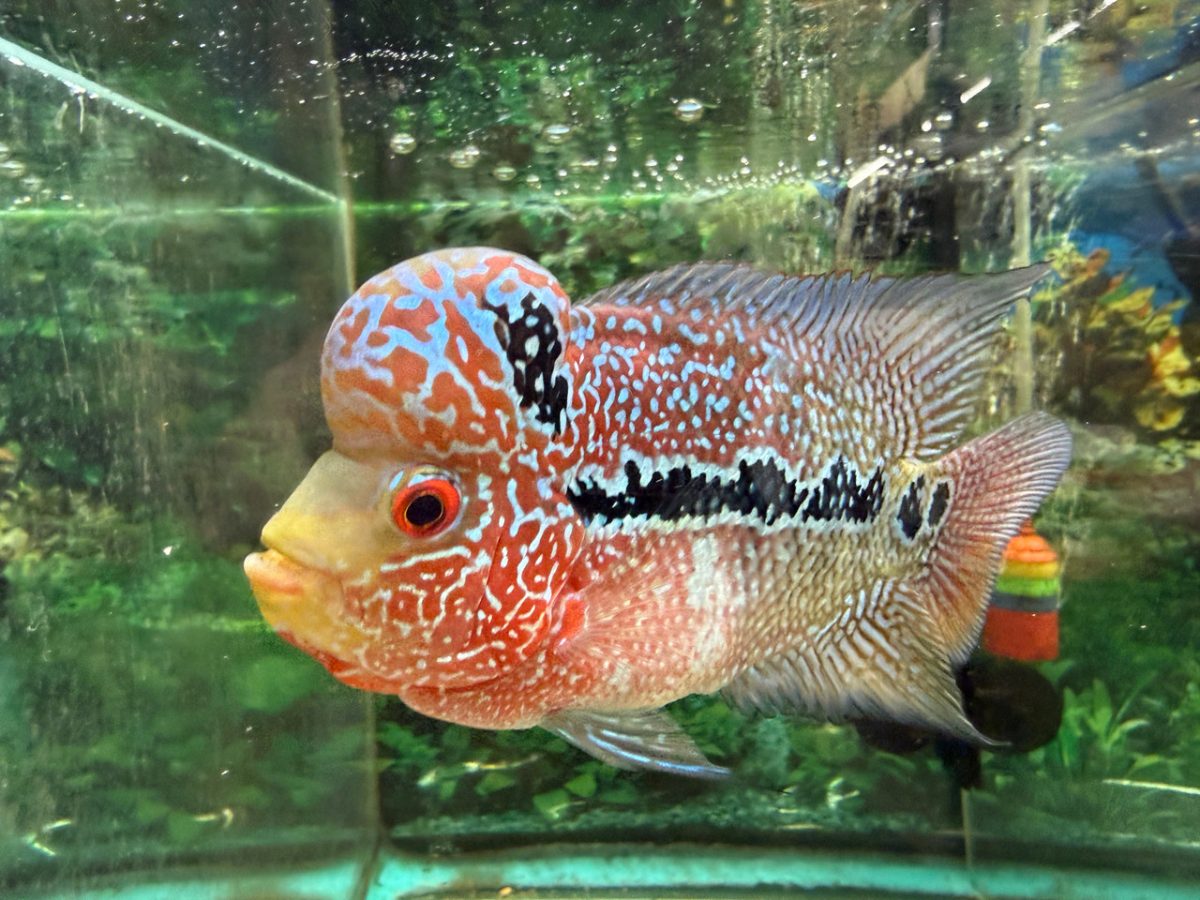
The flowerhorn was built from some of the most territorial fish in the hobby: large Central American cichlids such as the red devil, Midas cichlid and trimac. Breeders selected for head, color and pearling, not for a gentle temperament, and the result is a fish that treats its whole tank as territory to defend.
That is why our advice, and the advice of most experienced keepers, is one flowerhorn per tank, with no tank mates. It is not a rule invented to sell more tanks. It comes from watching the same story play out over and over.
A single adult, at roughly 12–16 inches (30–40 cm), needs at least 75 gallons (284 L) on its own. Every tank mate you add has to fit on top of that, and has to survive a fish that sees it as an intruder. Sizing and equipment are covered in tank setup.
What usually goes wrong
Mixed tanks with flowerhorns rarely fail on day one. They fail on a timeline, which is what fools people.
- The honeymoon. Juvenile flowerhorns at 2–3 inches often share a tank peacefully for weeks or months. It looks like it is working.
- The turn. As the fish grows and matures, usually as the kok and adult color come in, aggression climbs. Keepers consistently report that flowerhorns get more aggressive the bigger and older they get.
- The siege. The tank mate spends its life hiding, with torn fins, missing scales and dark stress colors. Stressed fish get sick, and disease can spread to the flowerhorn.
- The morning surprise. Many keepers find the result overnight: a fish killed, or a pleco with its fins and eyes damaged.
Other failures are quieter. Small fish become food. Shrimp and snails disappear. A tank mate that fights back can injure the flowerhorn, and a flowerhorn that spends all day patrolling and flaring is stressed too: dark, off its food and losing kok. Those signs are covered in diseases and kok growth.
Two flowerhorns are the worst combination of all. Two males will fight until one is badly hurt or dead, and even a male and female can turn on each other outside of spawning. Pairing for breeding is a separate, supervised process described in breeding.
Using a tank divider
A divider is the one reliable way to keep more than one flowerhorn in a single tank, and it is also how breeders introduce pairs. It works if you respect its limits.
- Size still matters. A divider splits the space; it doesn’t create more. Each section should still give its fish enough room, so dividing a 75-gallon tank for two adults is not a real solution.
- Choose the right type. Clear acrylic lets the fish see each other; perforated or mesh panels let water flow. Solid or frosted panels block the view if constant flaring becomes a problem.
- Secure it. Flowerhorns are strong and persistent. Fish push dividers out of their tracks, squeeze past gaps and jump over panels that stop short of the lid. Make sure it is fixed firmly, reaches the substrate and runs close to the top.
- Filter each side. Every section needs water movement and filtration, or one side fouls while the other stays clean.
- Watch the mood. Some fish color up and seem to enjoy a neighbor. Others stay dark and stressed, especially the fish that “loses” the staring contest. If that happens, block the view or move one fish.
The rare exceptions some keepers try
We would be ignoring real-world practice if we said no flowerhorn has ever lived with another fish. Some keepers do it, usually with very large tanks and a lot of experience. Keepers on large-fish forums describe the success rate as very low, and it depends more on the individual flowerhorn’s temperament than on any list of “compatible” species.
The attempts that have the best chance tend to share these features:
- A tank far larger than the minimum, commonly 150–200 gallons (570–760 L) or more, long enough for separate territories.
- Large, robust, fast tank mates that are too big to eat and don’t compete for the same space. Fish keepers mention include large plecos, bichirs, big armored catfish, silver dollars and other large cichlids such as oscars. Every one of these has also failed in other keepers’ tanks, and plecos in particular are often reported as badly injured.
- A flowerhorn that is known to be calm, not a young male whose adult temperament hasn’t shown yet.
- Plenty of broken sightlines with rock and driftwood, so fish can get out of view.
- A backup plan: a spare tank or divider ready the day aggression starts, because it often does.
If any of those is missing, don’t try it. And if you do, watch closely for months, not days. A tank that is peaceful with young fish tells you very little about how it will look in a year.
Dither fish and other myths
Dither fish are active schooling fish added to cichlid tanks to make shy fish feel safe and to spread aggression so no single fish gets singled out. In the right community of medium-sized cichlids, they can help. With a flowerhorn, the idea mostly breaks down.
“Dithers will calm it down”
Dithers work on fish that are nervous. A flowerhorn is not a nervous fish looking for reassurance. Small dithers become snacks, and larger ones such as silver dollars or giant danios tend to be chased and stressed rather than ignored.
“Give it a target fish”
Some keepers add a fish specifically to absorb aggression. That just means a second animal takes the damage. We don’t recommend it.
“Add fish while it’s small and they’ll grow up friends”
Growing up together may help some tanks, but it doesn’t cancel the aggression that comes with maturity. Plenty of failures began as juveniles raised together.
“Feeder fish are good company”
Feeders are food, not tank mates, and feeders from unknown sources are a common way to bring parasites and bacteria into a tank.
What to do if you want more fish
The simplest answer is a second tank. A flowerhorn in one tank and a peaceful community in another gives you both without risking either. If you like hybrid cichlids but want a fish that can live with others, blood parrots are commonly kept in community-style tanks; see our hybrid cichlids guide.
If you want another flowerhorn, give it its own tank or use a well-built divider in a tank large enough for both. Stock is available at flowerhorn.co, and the rest of our care guides start at the flowerhorn care guide.
Questions about flowerhorn tank mates
Can flowerhorns live with other fish?
Usually not. Flowerhorns are highly territorial and grow more aggressive as they mature, so most keepers house them alone. A few experienced keepers manage large, robust tank mates in very large tanks, but failures are common.
Can two flowerhorns live together?
Not without a divider. Two males will fight, often to serious injury or death, and even male-female pairs can attack each other outside of spawning.
Can a flowerhorn live with a pleco?
Some keepers try large plecos, but plecos are frequently reported with damaged fins and eyes once the flowerhorn matures. If you try it, use a very large tank and have a backup plan.
Do flowerhorns get lonely?
No. Flowerhorns are not social schooling fish and do well alone. A solo flowerhorn typically focuses on its owner and becomes more interactive.
Sources
- Flowerhorn tank mates: can introduction order make a difference?, MonsterFishKeepers
- Flowerhorn Cichlid Care: Tank Mates, Food & Other Tips, Aquarium Source
- Flowerhorn Care: Tank Set Up, Food, Tank Mates & Breeding, Modest Fish
- Cichlid communities: when cultures collide, Practical Fishkeeping
- Top 5 Dither Fish, Aquarium Co-Op