The pet flowerhorn
The fish that acts like a dog
Ask a flowerhorn keeper why they love their fish and luck rarely comes up. They talk about personality: a fish that knows them, waits for them and has opinions.
Not a decoration. A pet.
Most aquarium fish are admired from a distance. Big cichlids are different, and the hobby has a name for them: wet pets. Among wet pets the flowerhorn has a reputation of its own. Keepers call it a water dog, and after a few weeks with one it is easy to see why.
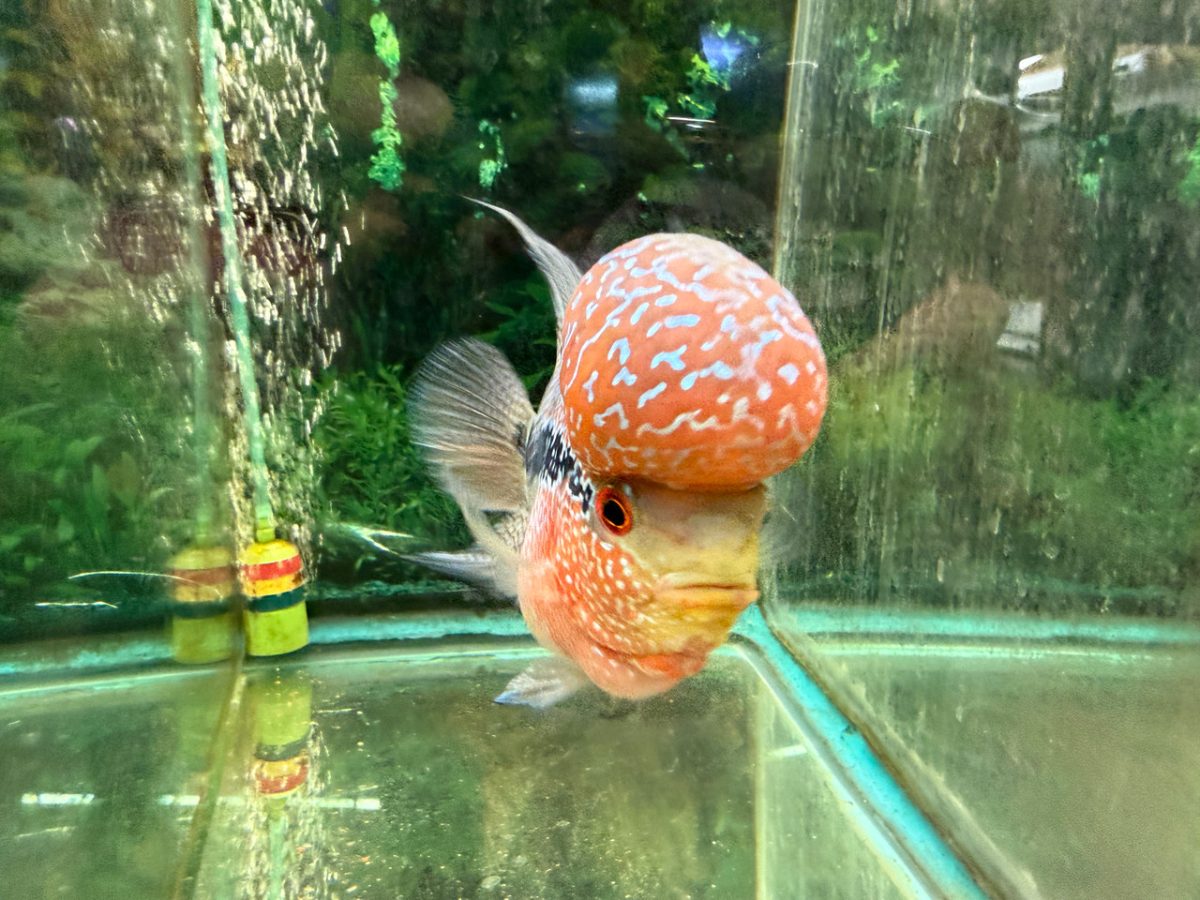
A settled flowerhorn doesn’t hide or school. It watches the room. It knows when its person walks in, it knows where the food comes from, and it lets you know when either one is late. As one long-time keeper put it, “They are the only fish I had that behave like dogs. They are very responsive and quickly approach the glass every time they see me.”
What the bond looks like
Every fish is an individual, but these are the behaviors flowerhorn owners describe again and again:
- The greeting. Rushing to the front glass, wiggling and “dancing” when its owner comes into view.
- Following. Tracking a person, or a finger drawn along the glass, from one end of the tank to the other.
- Telling people apart. Begging from a familiar face while flaring, or hiding, when a stranger comes close.
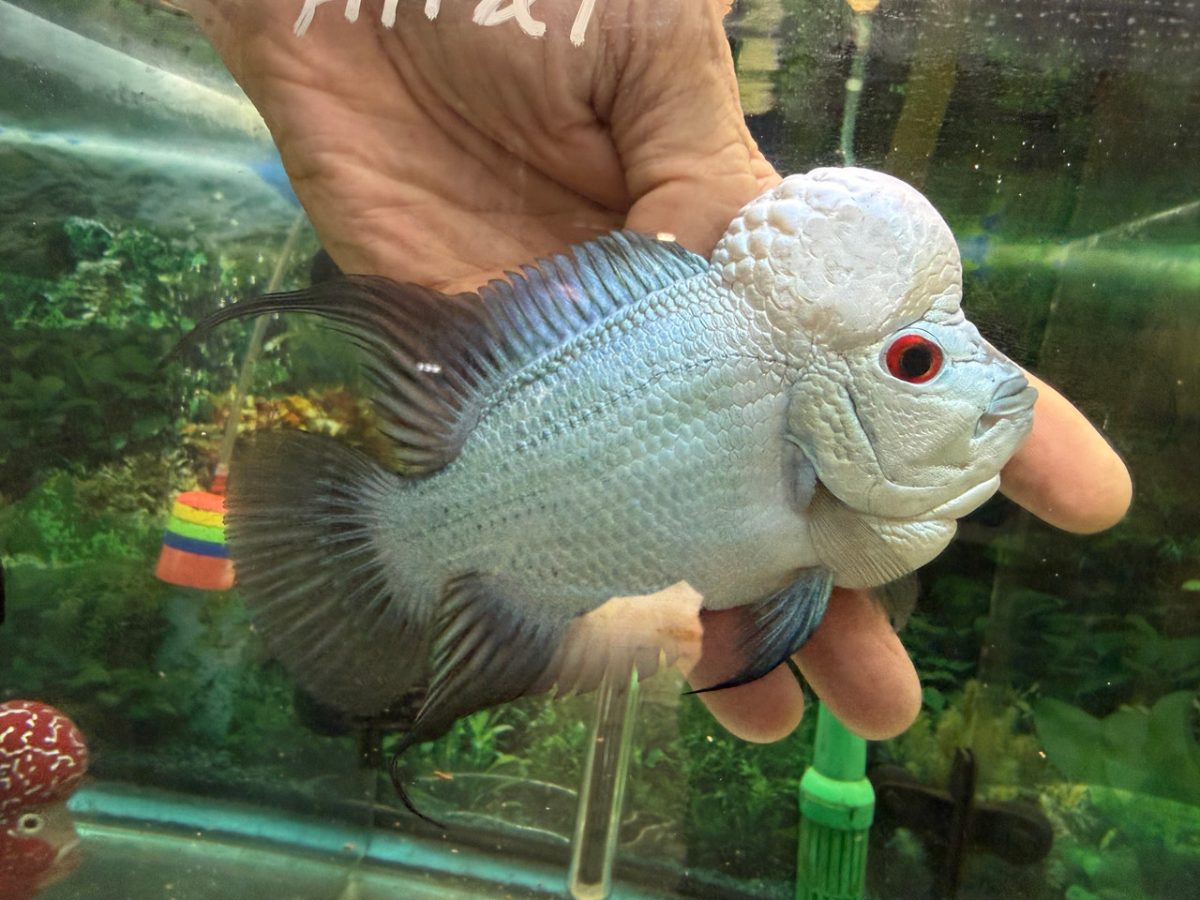
- Hand-feeding. Taking food from fingers, and in many cases tolerating, even seeking out, a gentle touch on the head.
- Play. Pushing a floating ping-pong ball around, rearranging gravel and decor, and chasing a target stick.
- Moods. Darkening and sulking after a tank rearrangement or a missed meal, then brightening back up.
Why a fish can bond with you
Cichlids are among the most behaviorally complex fish kept in aquariums. In the wild they hold territories, recognize rivals and neighbors, form pairs and guard their young for weeks, all of which demands memory and the ability to tell individuals apart. The flowerhorn inherits that from its Central American ancestors, then lives alone in a tank where the most interesting thing around is you.
Science supports the idea that fish can learn people. In a 2016 study published in Scientific Reports, researchers from the University of Oxford and the University of Queensland showed that archerfish could pick out a familiar human face from dozens of new ones. No one has run that experiment on flowerhorns, so we won’t overstate it. But combine a capable brain, a daily feeding routine and years of living beside the same people, and a fish that knows its keeper is no stretch at all.
Put simply, the flowerhorn bonds with the person who reliably means food, safety and something to watch. That is not so different from how a dog starts.
How to build a bond with your flowerhorn
Put the tank where life happens
A living room or home office beats a spare bedroom. A flowerhorn that sees people all day becomes curious rather than skittish. Set the tank at a height where you can meet the fish at eye level.
Let it settle first
Give a new fish a week or two to adjust before you push interaction. Keep the lights and routine steady.
Be the food
Feed at the same times each day, from the same spot, and be the one who does it. Tap lightly or show your hand in the same way before each feeding so the fish learns the cue.
Move from tongs to fingers
Offer pellets or a piece of shrimp with feeding tongs first. Once the fish takes food confidently, hold it in your fingertips at the surface. Wash your hands first, rinse well and never feed with lotion or soap on your skin.
Add play
A floating ping-pong ball, target training with a colored stick, or occasionally moving a smooth rock gives an intelligent fish something to do. Boredom shows up as glass-banging and decor-wrecking.
Keep it gentle
If your fish accepts touch, keep it brief and light on the head, away from the gills. Never grab, chase or lift a fish. Trust takes weeks to build and seconds to lose.
The care a pet flowerhorn needs
A happy flowerhorn is an interactive one, and the fastest way to lose that personality is poor water. These are the basics.
| Tank size | At least 75 gallons for one adult. Many keepers go to 90–125 gallons for big males. A juvenile can start smaller but grows fast. |
|---|---|
| Tankmates | Usually none. Flowerhorns are highly territorial and are best kept alone. |
| Temperature | 80–86°F (27–30°C) |
| pH | About 7.0–8.0 |
| Filtration | Heavy. Plan for a filter rated well above your tank size; flowerhorns eat a lot and produce a lot of waste. |
| Water changes | Around 25–30% weekly. Test for nitrate and keep it low. |
| Diet | A quality cichlid or flowerhorn pellet as the staple, with occasional shrimp or other treats. Avoid overfeeding. |
| Decor | Sparse and heavy. Smooth rocks, no sharp edges, no delicate plants. Secure the lid; flowerhorns can jump. |
| Lifespan | About 10–12 years |
Signs of a healthy, content fish are the same things that make it fun: good appetite, bright color, and a fish that comes to the glass to see you. A flowerhorn that hides, stays dark or stops eating is telling you something is wrong. Check the water first.
Is a flowerhorn the right pet for you?
A great fit if you…
- Want one fish with a big personality over a busy community tank
- Have room for a large tank and don’t mind weekly water changes
- Like the idea of a pet that recognizes you and interacts
- Are ready for a commitment of a decade or more
Think twice if you…
- Want lots of different fish together
- Want a planted aquascape. A flowerhorn will redecorate it
- Have very little space or time for maintenance
- Might not be able to keep it for its full lifespan
If a flowerhorn ever needs a new home, contact a local fish store or club. Never release one into a pond, lake or stream. Released flowerhorns have become invasive in parts of Southeast Asia, and in the wild they harm native fish.
Ready to meet one? Browse available fish at flowerhorn.co, or visit Pet Zone in San Diego and pick one out in person.
Questions about flowerhorns as pets
Do flowerhorns recognize their owners?
Keepers overwhelmingly say yes: flowerhorns greet their owner at the glass, beg for food and often react differently to strangers. Research has shown some fish can distinguish human faces, and cichlids are known for complex social behavior.
Can you touch a flowerhorn?
Many flowerhorns learn to tolerate or even seek a light touch on the head from a trusted owner. Build up to it slowly through hand-feeding, keep contact brief, wash and rinse your hands first, and be ready for a nip.
Why is my flowerhorn called a water dog?
Because of how it behaves: it follows its owner, begs at feeding time, plays with objects and shows moods. Hobbyists use “wet pet” for big interactive fish, and the flowerhorn is one of the best examples.
What size tank does a flowerhorn need?
Plan on at least 75 gallons for a single adult, with 90 to 125 gallons being better for large males. Flowerhorns grow to around 12 to 16 inches and should usually be kept alone.
Sources
- Fish can recognize human faces, new study shows, Phys.org (Newport et al., Scientific Reports, 2016)
- Fancying the Flowerhorn, Animal Scene
- The man who still rears his luohan fish, YP SG
- Flowerhorn cichlid, Wikipedia