Care
Flowerhorn care guide
A flowerhorn is a hardy fish that asks for a few things done well: a big tank, strong filtration, warm clean water and a sensible diet. Here is the whole picture, then the details.
What flowerhorn care comes down to
Flowerhorns have a reputation as tough fish, and it is mostly earned. They eat almost anything and shrug off small mistakes. That toughness is also the trap. A flowerhorn will keep eating and greeting you in a tank that is slowly failing, and by the time it hides, darkens or stops eating, the problem has usually been building for weeks.
Almost everything we see go wrong with flowerhorns traces back to four things: a tank that is too small, filtration that can’t keep up with a big eater, water changes that slipped, and too much food. Get those right and most of the rest follows, including the color, the kok and the personality.
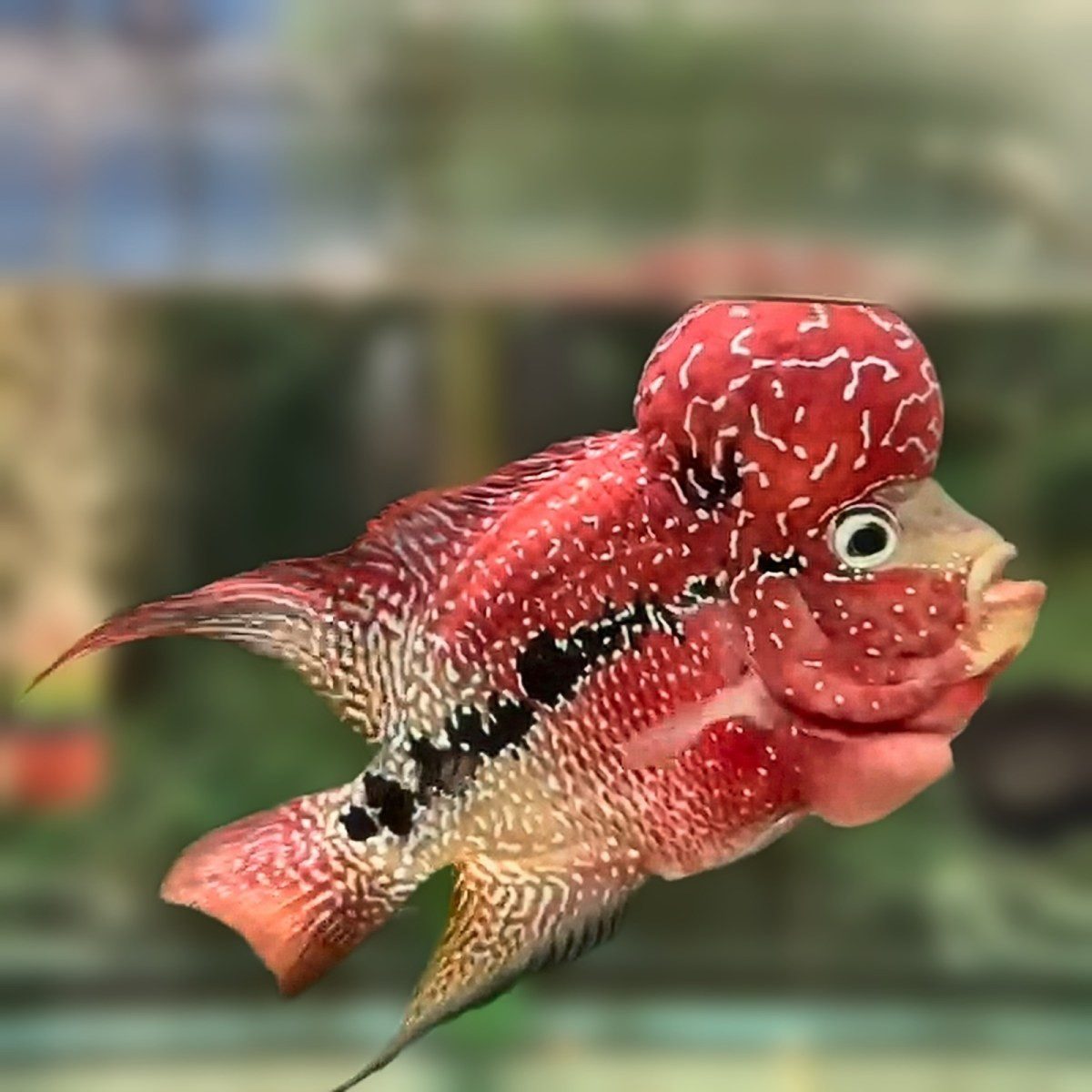
Flowerhorn quick care sheet
These are the ranges we work with. References vary a little; the guides below explain each number.
| Tank size | At least 75 gallons (284 L) for one adult; 90–125 gallons (340–473 L) for large males |
|---|---|
| Temperature | 80–86°F (27–30°C) |
| pH | About 7.0–8.0 |
| Hardness | Moderately hard, roughly 8–20 dGH |
| Filtration | Heavy: a canister or sump rated well above the tank volume |
| Water changes | 25–30% weekly; ammonia and nitrite at zero, nitrate kept low |
| Diet | Quality flowerhorn or cichlid pellet as the staple, frozen or fresh treats a few times a week |
| Lifespan | About 10–12 years |
| Adult size | Roughly 12–16 in (30–40 cm) |
| Tank mates | Best kept alone |
A weekly care routine
A flowerhorn tank needs little time, but it needs it every week:
- Daily: feed one to three small meals, check the thermometer, and look at your fish. Appetite, color and whether it comes to the glass tell you more than any test kit.
- Weekly: change 25–30% of the water with a siphon that pulls waste off the bottom, and test ammonia, nitrite, nitrate and pH.
- Every two to four weeks: rinse the mechanical filter pads in removed tank water, never straight tap water, and wipe the glass.
- Every few months: check heater and filter parts, replace worn pads, and restock food before it goes stale.
The flowerhorn care guides
Each guide goes deep on one part of keeping a flowerhorn. Start with the tank and water if you are setting up, or jump to the topic you need.
For the relationship side of keeping one, see the flowerhorn as a pet. Unfamiliar terms are explained in the glossary.
Where new keepers go wrong
- Buying the tank for the fish they have now. A 3-inch juvenile can pass 10 inches within about a year. Plan for the adult.
- Adding the fish before the tank is cycled. Ammonia is more toxic in warm, alkaline water, which is exactly what flowerhorns live in.
- Feeding for the begging, not the fish. A flowerhorn will always ask for more. Leftover food fouls the water fast.
- Adding a tank mate. It rarely ends well. Our tank mates guide explains why.
If you are in San Diego, bring a water sample or your questions to Pet Zone.
Questions about flowerhorn care
Are flowerhorns easy to take care of?
They are hardy and forgiving of small mistakes, but they are not low-maintenance. They need a large tank, heavy filtration and weekly water changes for their whole 10 to 12 year life.
How often should I change my flowerhorn’s water?
Change about 25 to 30 percent every week. Heavily fed or crowded tanks may need more, and test results are the best guide.
Can a flowerhorn live with other fish?
Flowerhorns are highly territorial and are best kept alone. Most attempts at tank mates end with injured or dead fish.
Sources
- Why is your Flowerhorn or Parrot Cichlid Sick?, Neale Monks, WetWebMedia
- Flowerhorn Cichlid Care Guide, AquariumStocking
- How to Care for Flowerhorn Cichlids, AquariumLab
- How Big Do Flowerhorn Cichlids Get?, Hepper
- Ammonia in Aquatic Systems, University of Florida IFAS Extension