Care
Reading flowerhorn behavior
A flowerhorn tells you how it feels all day long: in its color, where it sits, how it eats and how it treats your hand. Here is what those behaviors usually mean, and which ones are worth acting on.
What normal flowerhorn behavior looks like
Before you can tell a problem from a mood you need a baseline, so watch your own fish at the same times of day for a week before deciding anything is wrong. A flowerhorn is a large Central American cichlid by ancestry and behaves like one: it claims the whole tank, investigates anything new, eats with enthusiasm and reorganizes the furniture. Most of what alarms new keepers is the fish being exactly what it is.
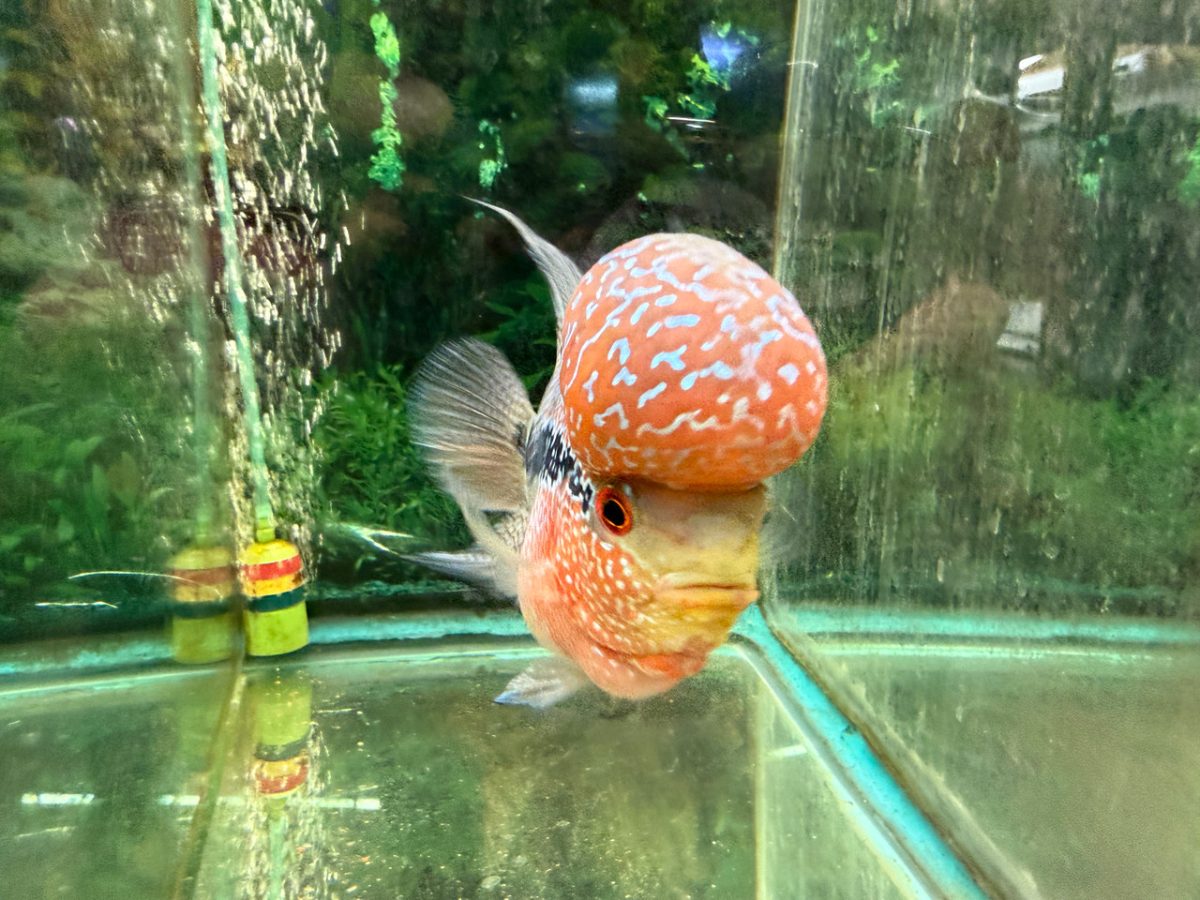
- Patrolling front to back. Territory. The whole tank belongs to the fish and it checks the borders.
- Rushing the glass when you walk in. Recognition and food. See the flowerhorn as a pet.
- Spitting substrate and shoving rocks. Ordinary cichlid digging, covered below.
- Darkening and brightening through the day. Mood and light. Dark at lights-on and bright by noon is fine.
- Resting low at night. Sleep. A dark, still flowerhorn at 11pm is not a sick one.
One rule is worth naming early: flowerhorns are kept one per tank, as explained in tank mates. Every aggression problem below is simpler with no second fish in it.
Glass surfing and pacing
Glass surfing is a fish swimming up and down, or back and forth, along the tank wall for long stretches. Aquarium Co-Op names the usual drivers as stress, boredom and territorial defense, and notes there is no guaranteed cure. Work through the causes cheapest first.
- Water first. Ammonia, nitrite or a nitrate spike makes a fish restless before it makes it visibly sick. Test with a liquid kit; the water and temperature guide has the numbers and the weekly 25 to 30 percent change that holds them.
- Temperature and flow. A heater stuck low, or a fish parked in a jet of current, will pace. Hold 80 to 86°F (27 to 30°C), split across two heaters at roughly 3 to 5 watts per gallon.
- An unsettled tank. Pacing in the first days after a move is ordinary. Wait it out.
- Something outside the glass. A cat, a TV, a walkway, another tank in the sightline, or the fish’s own reflection, which often explains a track worn along one panel.
- Too little space. A 12 to 16 inch fish in a 40 gallon tank paces because it has run out of tank. Adults need 75 gallons minimum, 90 to 125 for a big male. The tank calculator gives you the tank, filter and heater numbers for your fish.
Pacing that starts twenty minutes before feeding and stops when the pellets land is a dinner bell, not distress. If the water is clean and the tank is big enough and it still paces, treat it as boredom: heavy structure to swim around and dig at, something floating to push, and food scattered rather than dumped in one spot.
Flaring, charging the glass and the fish in the mirror
Flaring is the full threat display: gill covers spread wide, fins up, body turned side-on, sometimes a charge that ends in a thump against the glass. It is normal cichlid language, and what matters is who the fish flares at and how much of its day goes into it.
A flowerhorn that rushes the front glass at you is mixing greeting with posturing, and most keepers see it daily. It stops being harmless when the fish hits hard enough to scrape its nose and lips or bruise the kok. Then break the sightline and stop tapping the glass.
Fighting its own reflection
Aquarium glass turns into a mirror whenever the room is brighter than the water, so reflection fights peak in the evening or with the tank light off. The fish sees an intruder that never backs down and never leaves.
That matters more than it sounds. In a 2010 Biology Letters study, Desjardins and Fernald found that cichlids fighting a mirror showed activity in a brain region associated with fear that they did not show against a real opponent. The work used an African cichlid, not a flowerhorn, so take it as a hint rather than proof, but it fits what keepers describe: a fish that battles a reflection for weeks turns dark and edgy.
The fixes are cheap: a background on the back and at least one end panel, the tank light on while the room is lit, and no mirror or second tank in view.
Sulking, hiding, sitting on the bottom and going off food
Flowerhorns sulk, and they are theatrical about it. A sulking fish goes dark, shows heavy black blotches, wedges itself behind the filter intake, sits on the bottom and ignores you. Rearranged decor, a big water change or a broken routine will all do it. For a day or three that is mood. What turns it into a health question is the company it keeps.
Probably mood
- Started right after an obvious change
- Still tracks you and reacts if you approach
- Fins open, breathing steady, eyes clear
- Improving day by day
Treat as illness
- Clamped fins, rapid or labored breathing
- Gasping at the surface (act immediately)
- White stringy waste, bloating, tilting or floating
- Spots, pits, cotton tufts, cloudy eye, ragged fins
- Worse each day in clean water
Anything in the right-hand column belongs on the flowerhorn diseases page, which covers symptoms, causes and what keepers commonly use. Do not medicate a mood.
Appetite strikes
A flowerhorn that suddenly refuses food frightens owners more than anything else it does, and most of the time it passes. A healthy adult can skip a week of meals without harm, and experienced keepers routinely tell buyers of new fish to expect several days of refusal while the fish settles.
Common causes are a recent move, water quality, water that has drifted cool, a fish holding out for the shrimp it got last week, breeding condition, or the first stage of an illness. The response is the same either way: stop offering more food, siphon out what was refused, test the water, check the temperature, and offer one favorite food in small amounts rather than piling in variety, which teaches a fish to hold out for something better. Portions by age are in the feeding guide. If a fish in clean, warm water has eaten nothing for about a week, or refuses food alongside a physical symptom, stop calling it a mood.
When the fish attacks your hands
A mature flowerhorn defending its tank against an arm is doing its job, not misbehaving. Adults have serious jaws and a determined male can bruise a knuckle or break skin, so work around it rather than try to win.
- Feed first. A fed fish is a calmer fish. Feed, wait a few minutes, then start.
- Keep your hands out of the water. Keepers commonly extend a siphon with rigid tubing or PVC so the hose reaches the bottom while their hands stay at the rim. Long-handled scrapers, magnet cleaners and tongs cover the rest.
- Give it something else to push against. A net or tongs held as a moving barrier is the standard answer on large-fish forums, and keepers report fish learn to back off when the tool appears. Use it to block, never to hit the fish.
- Section the fish off for big jobs. For a rescape or a heater swap, a divider or a large breeder net holds it at one end. Do not chase or grab a flowerhorn to make a point; that costs trust you spent months building.
- Look after your skin. Wash and rinse before and after, keep open cuts out of tank water, and see a doctor about an aquarium-related wound that stays red or will not heal.
If a friendly fish turns hand-aggressive, look for the trigger: maturity, breeding condition, a reflection it has been fighting, or a change in the tank.
Digging, redecorating, and behavior after a change
Cichlids move substrate for a living. In the wild they dig pits, clear spawning sites and shift sand to mark territory, and a tank flowerhorn does the same to gravel and anything light enough to shove. Steady digging by a bright, hungry fish is a confident animal. Frantic digging in one corner by a dark fish is worth investigating, starting with the water.
You will not stop it, so build for it: smooth gravel or sand, rocks set on the bare glass so a dug-out pit cannot drop one, heaters and intakes clipped high, no delicate plants, and a tight weighted lid, because these fish jump. Layout is in tank setup.
After a move, a new tank or a water change
Expect a behavior change and do not overreact. Keepers describe settling times from a couple of hours to several weeks, with hiding, dark color and refused food as the usual signs. Keep lights low for a few days, keep the room quiet, feed lightly and leave the decor alone. Unboxing a shipped fish has its own routine in shipping and acclimation.
A fish that sulks after every water change is telling you about your water changes, not about water changes in general. The usual culprits are a temperature mismatch between new and old water, dechlorinator skipped or underdosed, and very large changes done rarely, which swing pH and nitrate instead of holding them steady. Match the temperature, treat the water, change 25 to 30 percent weekly. Darkening for an hour and then coming out to beg is fine.
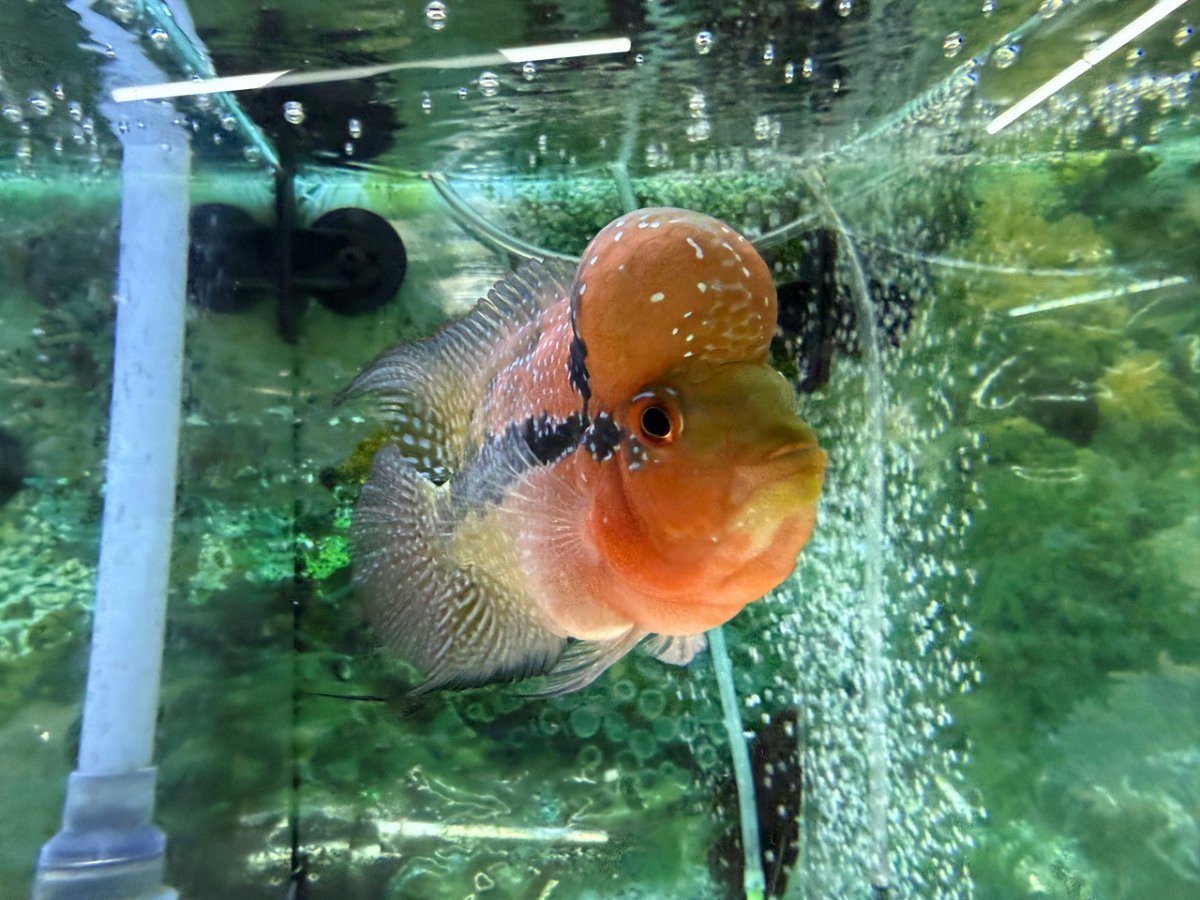
Behavior or health problem? How to tell
Veterinary references for fish point at the same root causes: stress, poor water quality, overcrowding and skipped quarantine. Behavior is usually the first signal that one of them has gone wrong. So test the water before you form an opinion: ammonia, nitrite, nitrate, pH and temperature, every time. Then judge by pace and pattern, not by any single symptom.
| Question | Points to mood | Points to illness |
|---|---|---|
| How fast did it start? | Overnight, right after a change | Crept in over days, no trigger |
| Which way is it going? | Better each day | Same or worse each day |
| Anything physical changing? | Color only | Fins, eyes, skin, breathing, waste, belly |
| Does removing the trigger help? | Yes, within a day or two | No change |
Two things skip the flowchart: gasping at the surface, and a fish lying over on its side. Both are emergencies. Check oxygen, temperature and ammonia at once and do a water change.
Everything else is watching. Keep notes, because a week of pattern tells you more than one worrying evening. Start from the flowerhorn care guide for the rest of the routine, check size and growth if you are judging whether a young fish is on track, and use the glossary for any term you have not met. If you are still shopping, watch a fish eat before you buy it, at Pet Zone in San Diego or anywhere else.
Questions about flowerhorn behavior
Why is my flowerhorn swimming up and down the glass?
Glass surfing usually comes from stress, boredom or territorial defense. Test the water first, then check temperature, tank size, anything visible outside the glass, and the fish’s reflection. Pacing just before feeding time is only anticipation.
Why does my flowerhorn attack its reflection?
Aquarium glass acts as a mirror when the room is brighter than the tank, and the fish treats the reflection as an intruder that never leaves. Add a background to the back and end panels, keep the tank lit while the room is lit, and remove any mirror.
Why is my flowerhorn dark, hiding and sitting on the bottom?
That is the classic flowerhorn sulk, common after a move, a big water change or rearranged decor, and it usually lifts within a few days. If it comes with clamped fins, heavy breathing, spots, bloating or stringy waste, treat it as illness instead.
How long can a flowerhorn go without eating?
A healthy adult can skip meals for a week or more without harm, and new fish often refuse food for several days while they settle. Test the water, check the temperature, and look harder if a week passes in clean water or a symptom appears.
Why does my flowerhorn attack my hand during water changes?
It is defending its territory, and mature fish bite hard enough to break skin. Feed first, use an extended siphon and long-handled tools, and hold a net or tongs as a barrier rather than trying to win the argument.
Sources
- Disorders and Diseases of Fish, Merck Veterinary Manual
- Why does my fish keep glass surfing?, Aquarium Co-Op
- What do fish make of mirror images?, Desjardins & Fernald, Biology Letters (2010)
- Protecting hands and arms from an aggressive flowerhorn, MonsterFishKeepers
- How long will it take a flowerhorn to adjust in the new tank, MonsterFishKeepers
- Why your cichlids dig constantly around substrate and decorations, Go Fish Aquariums