Buying
Shipping and acclimating a new flowerhorn
A flowerhorn that spent the night in a bag needs a calm, careful first hour. Most losses after shipping come from rushing that hour, not from the trip itself.
Before you click buy
Get the tank ready first. It should be fully cycled, heated, filtered, lidded and stable for at least a few days, with nothing else to fix on arrival day. The tank setup guide and water guide cover the details.
Then plan around the shipping calendar:
- Be home. A box left on a hot porch or a cold step is the most avoidable loss there is. If you cannot be home, ask whether the seller can ship to a carrier location for pickup.
- Watch the weather. Heat waves and cold snaps at either end are the biggest shipping risk. Good sellers will hold an order for a better week, and you should let them.
- Read the guarantee now, not after. Know exactly what the seller needs from you if something goes wrong.
- Have supplies ready: a clean bucket used only for fish, airline tubing, a water conditioner that detoxifies ammonia, a thermometer, a net and your phone charged for photos.
How overnight shipping and guarantees work
Live fish should only travel by overnight air service. At Pet Zone, livestock ships by FedEx Priority Overnight on Tuesdays, Wednesdays and Thursdays, so a fish never sits in a depot over the weekend. Orders placed before the 9:30 a.m. Pacific cutoff can go out the next shipping day, though processing can take a few business days.
“Overnight” means the fastest service available, not a promise of next-morning delivery to every address. Rural areas and bad weather can add hours or a day.
A live arrival guarantee covers a fish that is dead when the box arrives. Terms differ by seller, so read them, but these conditions are common. Our own, as an example:
- It applies to overnight shipments only.
- Claims need clear photos of the fish in the unopened bag, emailed with your order number. Our San Diego flowerhorn page asks for this within 4 hours of delivery.
- A valid claim gets a replacement or store credit. Shipping costs are not refunded.
- Carrier delays and weather, physical damage such as torn fins, and problems with the buyer’s tank or water are not covered.
Some sellers treat all livestock sales as final beyond that. If a listing does not say, ask before you pay.
Delivery day: opening the box
Bring the box inside and open it in a dim room. A fish that has been in darkness all night can panic in bright light. Before you do anything else:
- Photograph or video the fish in the sealed bag, with the shipping label in frame if you can.
- Check that it is breathing. A fish that has spent the night in the dark is often sluggish at first; watch the gills for a minute before assuming the worst.
- Check the temperature by holding a thermometer against the bag or reading the water once opened. Flowerhorns live at about 80 to 86°F (27 to 30°C), but a shipped bag often arrives cooler.
Do not float a long-shipped bag in the tank for a long time. After a night in a sealed bag the water holds ammonia from the fish, and the carbon dioxide it breathed out has lowered the pH. At low pH most of that ammonia is in a less toxic form. The moment the bag is opened, carbon dioxide escapes, the pH rises and the ammonia turns more toxic. Warming the bag makes it worse. That is why shipped fish get a different routine from a fish carried home from a local store.
Drip acclimation, step by step
This is the method most experienced keepers use for shipped fish. Plan on 30 to 60 minutes.
Set up the bucket
Place a clean, dedicated bucket on the floor below the tank in a dim, quiet spot. Never use a bucket that has held soap or chemicals.
Open the bag and treat the water
Cut the bag open, pour the fish and its water gently into the bucket, and immediately add a water conditioner that detoxifies ammonia. Dose by the product label based on the volume of water in the bucket. If there is only a little water, tilt the bucket so the fish stays covered.
Start the drip
Run airline tubing from the tank to the bucket as a siphon. Tie a loose knot in the tubing or fit a small valve so the flow is a slow drip, commonly a few drips per second, not a stream.
Let the water blend
Over 30 to 60 minutes, let the volume in the bucket roughly double, then double again. Pour some off if it gets too full. This brings the temperature, pH and hardness of your tank to the fish gradually.
Move the fish, not the water
Net or gently hand-carry the fish into the tank. Throw the bucket water away; never pour shipping water into your aquarium.
Lights off
Leave the tank lights off for the rest of the day, keep the room quiet and resist the urge to watch from an inch away.
If the fish is gasping, rolling or the bag water is visibly fouled, shorten the process. Many keepers switch to a quick “dose and move”: treat the bag water, match temperature for a few minutes, and get the fish into clean tank water. Prolonged exposure to dirty bag water is the greater danger.
First feeding and the first two weeks
The first feed
Skip food on arrival day. Offer a few pellets the next day, and remove anything left after a few minutes. Many flowerhorns ignore food for a day or several after shipping; that is normal. Uneaten food rotting in a new tank is a bigger problem than a fish that fasts. The feeding guide covers what to move on to.
What is normal
- Dark color and stress bars for the first days.
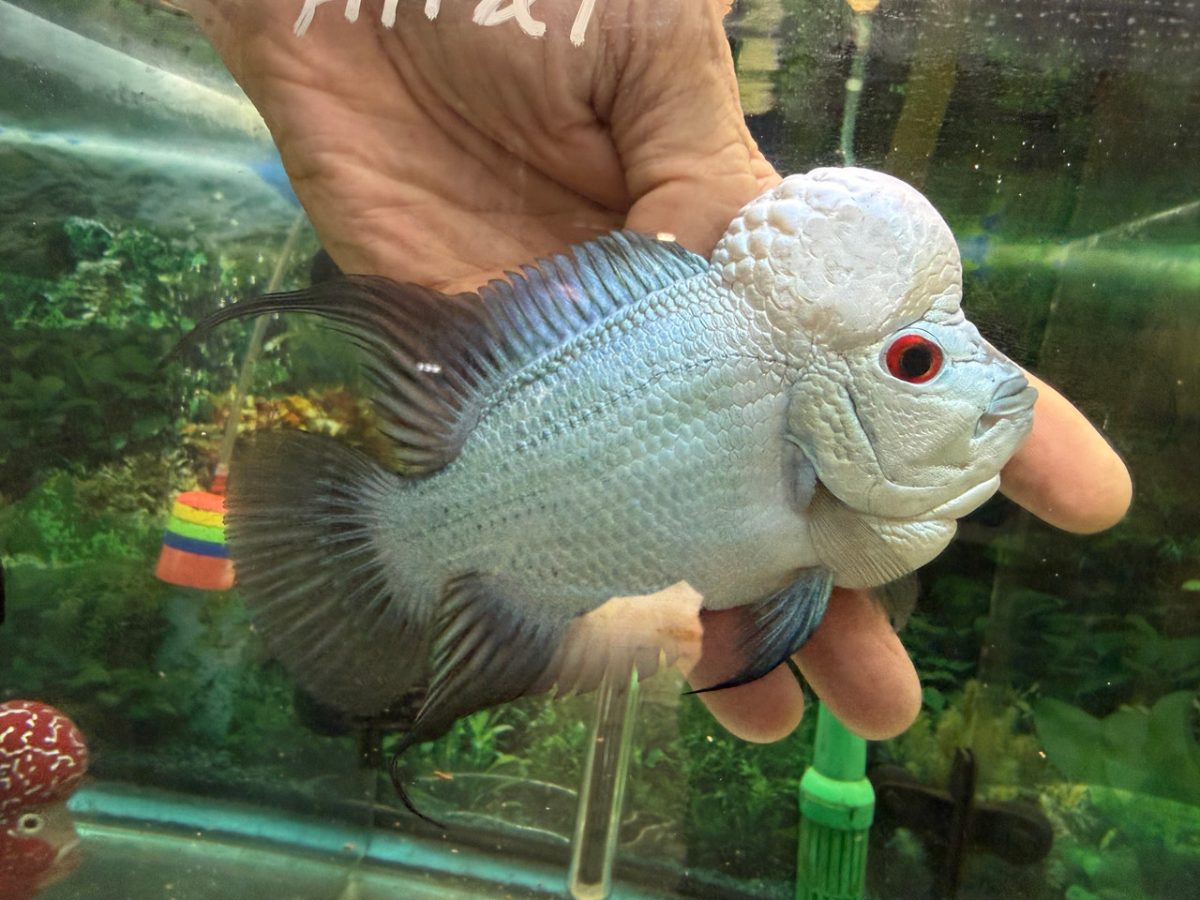
- A kok that looks smaller than in the seller’s photos.
- Hiding, or pacing and glass-surfing, while the fish learns the tank.
Your routine
- Test ammonia and nitrite every day or two in the first week. A new fish in a new tank can push a young cycle over the edge.
- Keep the temperature steady; we like the low-to-middle end of the range, around 80 to 82°F (27 to 28°C), and avoid big swings.
- Do normal partial water changes; do not rearrange decor or add new fish.
- Feed small amounts and build up as appetite returns.
By the end of two weeks most flowerhorns are eating eagerly, showing their color again and meeting you at the glass. Start building the bond described in the flowerhorn as a pet. A fish that is still dark, refusing food or clamping its fins after that deserves a closer look; see flowerhorn diseases, and test the water first.
Quarantine if you have other tanks
A flowerhorn normally lives alone (see tank mates), so if its tank is new and empty, that tank is effectively its quarantine. If you already keep other fish, protect them.
- Keep the new fish in its own tank for several weeks; many keepers use about four weeks before sharing anything.
- Give that tank its own net, bucket, siphon and test kit, or disinfect and dry them between tanks.
- Work on the established tanks first and the new fish last, and wash your hands and arms in between.
- Watch for white spots, cloudy eyes, frayed fins, pitting on the head and unusual breathing, and treat in the quarantine tank if needed.
For choosing your fish in the first place, go back to the buying guide or read how to grade a flowerhorn. Fish from flowerhorn.co ship overnight nationwide, and local buyers can skip the box entirely at Pet Zone in San Diego.
Questions about shipping and acclimating flowerhorns
How long should I acclimate a shipped flowerhorn?
Most keepers drip acclimate for about 30 to 60 minutes after treating the bag water with an ammonia-detoxifying conditioner. If the fish is struggling or the water is fouled, move it sooner.
Should I float the bag for a shipped fish?
Not for long. Opening and warming a bag that has been sealed overnight makes the ammonia in it more toxic, so treat the water and acclimate in a bucket instead.
When should I feed a new flowerhorn?
Wait until the day after arrival and offer only a few pellets. It is normal for a shipped flowerhorn to refuse food for a day or more.
What if my flowerhorn arrives dead?
Do not open the bag. Photograph the fish in the sealed bag right away and contact the seller with your order number, following their guarantee terms and time limit.
Why is my new flowerhorn dark and hiding?
Shipping and a new tank are stressful, and dark color with some hiding is normal for the first days. Keep lights low, test the water and give it time.
Sources
- Shipped fish acclimation: the three methods debated, MonsterFishKeepers
- Livestock Shipping Schedule, Pet Zone Tropical Fish
- Live Arrival Guarantee Policy, Pet Zone Tropical Fish
- Flowerhorns in San Diego, Pet Zone Tropical Fish
- Refund Policy, flowerhorn.co