Breeding & strains
How flowerhorns are bred
A flowerhorn is never finished. Every fish in a store is the survivor of a spawn of hundreds or thousands, graded again and again for head, color and pearls.
Why flowerhorn breeding is different
Breeding most aquarium fish is about keeping a species true. Breeding flowerhorns is closer to breeding show dogs from a mixed pedigree. Because the flowerhorn is a hybrid of several cichlids, the genes in any spawn can pull in a dozen directions. Two magnificent parents can produce a tank of ordinary fry, and an unremarkable pair can throw one champion.
So the craft has two halves. The first is getting a pair to spawn at all, which is harder than it sounds with an aggressive fish whose males are often infertile. The second, and the one that separates good breeders from everyone else, is selection: raising hundreds of fry and keeping only the handful worth keeping.
Choosing a breeding pair
Breeders generally wait until fish are sexually mature, which for a male can take 8 to 10 months, and many prefer pairs of 12 to 18 months and at least 6 inches (15 cm) long. They pick each parent for what it passes on.
| Male | Female | |
|---|---|---|
| Looked for | A large, firm kok, vivid color, a strong body, heavy pearling | Intense base color, good body shape, clear markings |
| Usually | Larger, with the bigger kok and longer, pointed fins | Smaller kok, and often a black spot on the dorsal fin |
| Watch for | Fertility. Many males, especially from heavily line-bred strains, are sterile | Readiness: a swollen vent and cleaning of flat surfaces |
Telling sexes apart in young fish is unreliable. The most dependable sign is the breeding tube (the ovipositor or papilla) that appears near the vent when a fish is ready to spawn: broader and blunt in females, narrower and pointed in males.
From pairing to free-swimming fry
-
Condition the pair
Both fish are fed a rich, high-protein diet for several weeks and kept in warm, very clean water. Many breeders keep the temperature around 82°F (28°C) and step up water changes.
-
Introduce them through a divider
Flowerhorns can seriously injure a mate that isn’t ready. The standard approach is a clear or mesh divider that lets the pair see each other for days or weeks. Flaring, color changes and both fish cleaning the same stone on their side of the divider are signs they are ready. The divider comes out only under supervision, and goes straight back in at the first sign of a one-sided fight.
-
Spawning
The female lays her eggs on a flat stone or ceramic tile and the male follows to fertilize them. A single spawn can run from 500 to 2,000 eggs. The female usually takes the lead in guarding them, fanning water over the clutch with her fins.
-
Hatching
At about 82°F the eggs hatch in two to three days. Because parents sometimes eat the eggs, many breeders move the stone to a separate hatching tank with gentle aeration and treat the water against fungus.
-
Free-swimming fry
Within about a week the fry absorb their yolk sacs and start swimming. They go onto newly hatched brine shrimp and finely crushed pellets, several times a day, with frequent small water changes.
Grading: where flowerhorns are really made
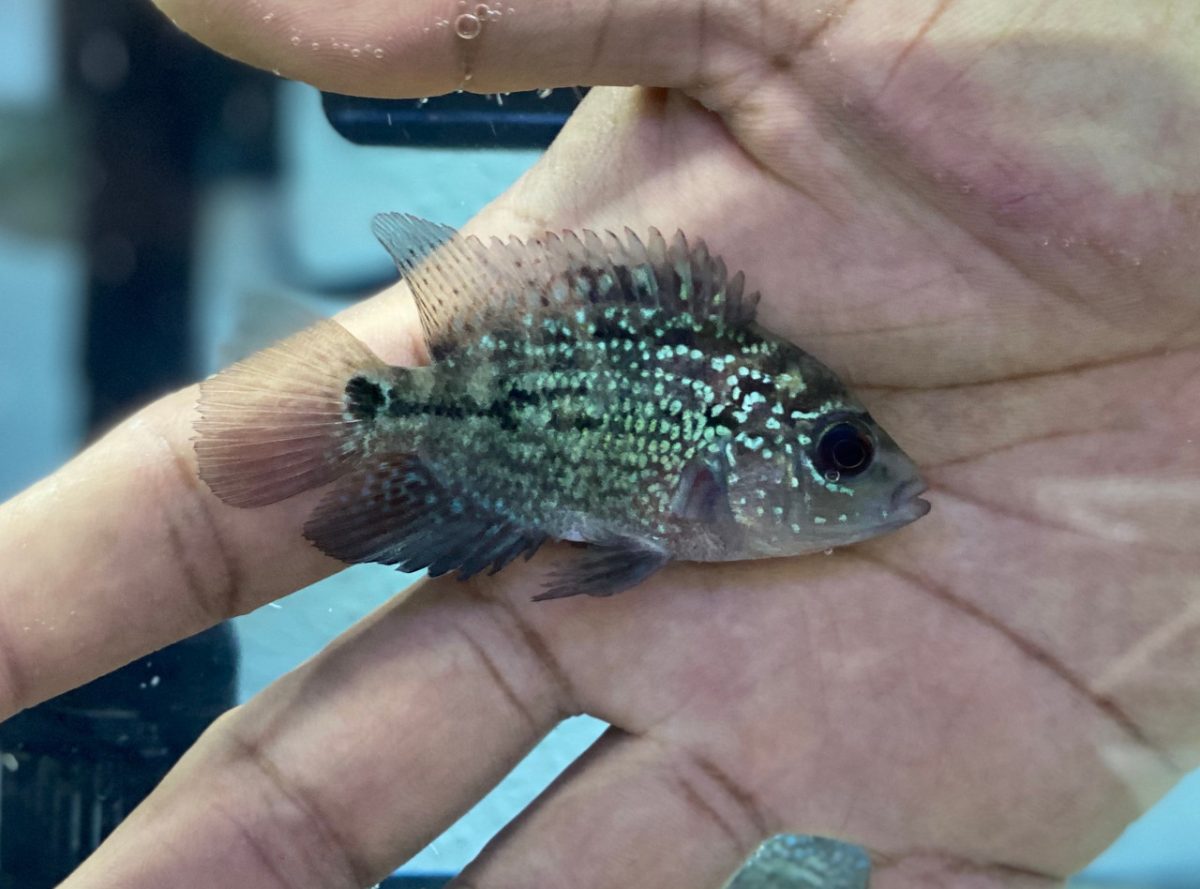
This is the part hobbyists rarely see. A spawn of a thousand fry might yield 50 to 100 that show promising traits by three months old. Breeders sort the whole group three or four times in the first six months and keep only the top 5 to 10 percent for further growing out.
What they grade on changes with age:
- Early weeks: body shape, growth rate, and the first hints of the black lateral markings.
- Around three months: pearling (the iridescent spangles on the scales), face shape and color starting to show.
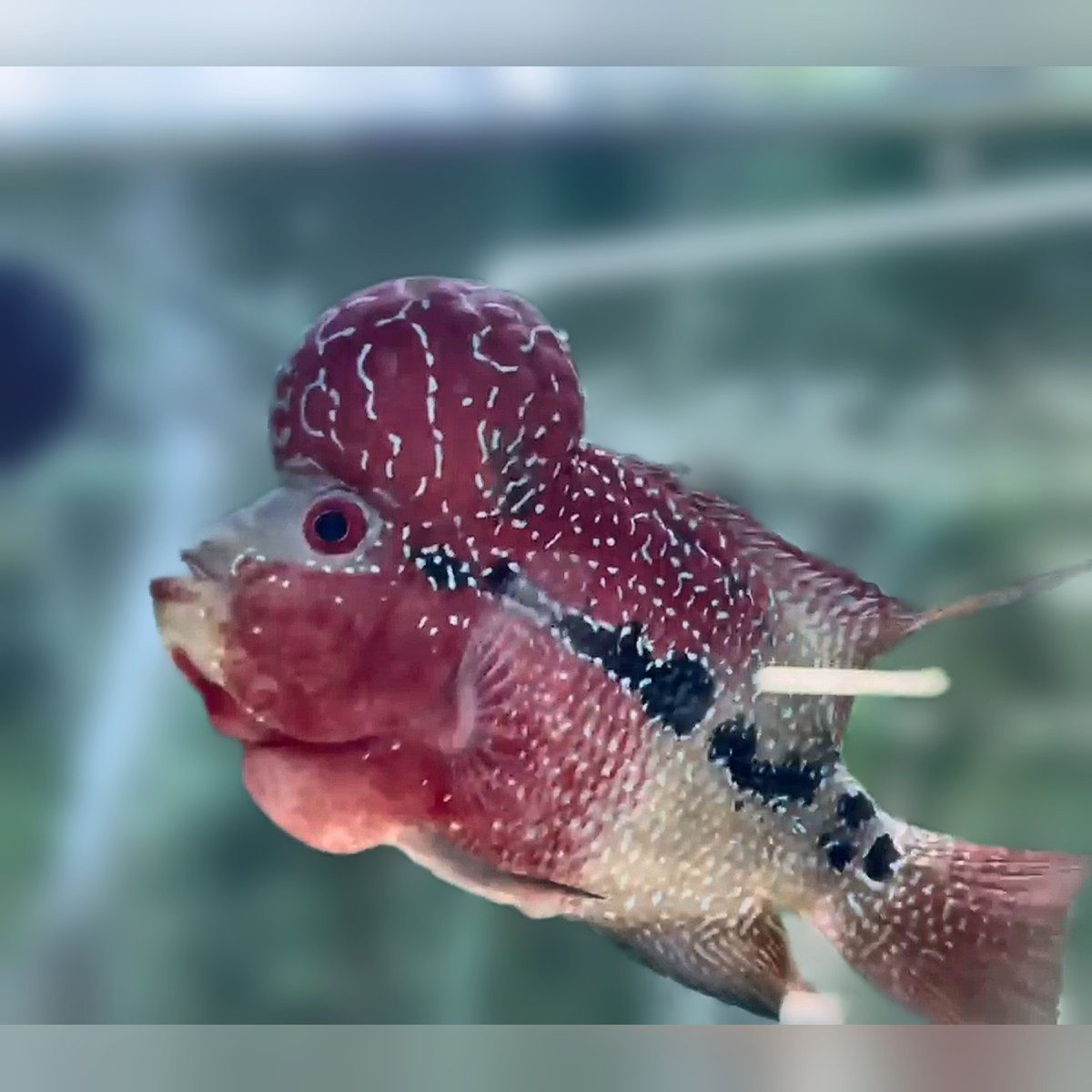
- Six to twelve months: the kok. Most fish begin developing a hump in this window, and its size and shape largely decide a fish’s value.
Color keeps changing well past this point. Golden Base fish, sometimes called faders, begin dark and lose their black over months to reveal gold or orange. Buying a young flowerhorn is always partly a bet on how it will turn out.
The major flowerhorn strains
A strain is a line bred for a particular look. Names vary by country and seller, and many fish are crosses between strains, so treat these as families rather than strict breeds.
| Strain | Associated with | What sets it apart |
|---|---|---|
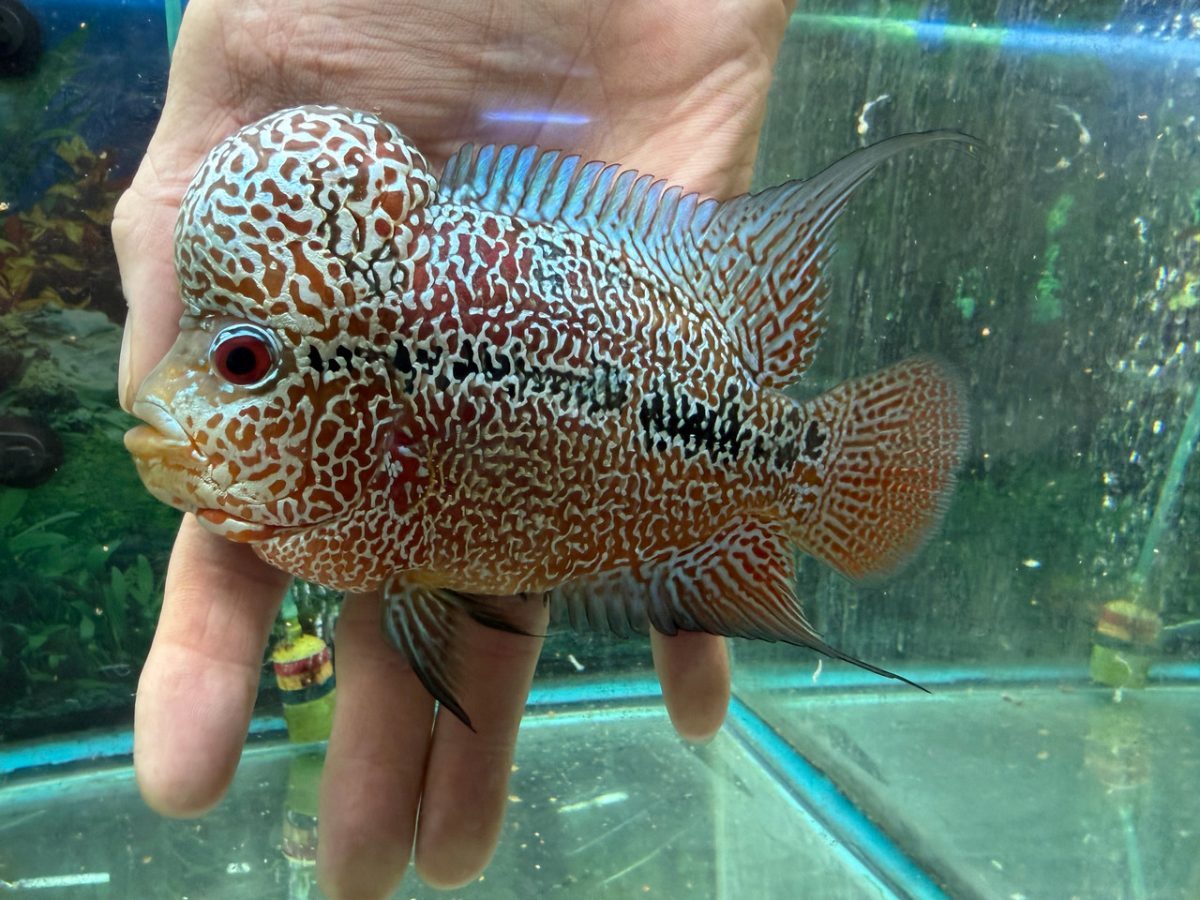
| Kamfa | Malaysia & Thailand | The most sought-after line. Square, compact body, a very large kok, dense pearling and often a downturned or “sunken” eye. Developed by crossing early flowerhorns with Vieja cichlids. Fertility is often poor. |
| Zhen Zhu (ZZ, “pearl”) | Malaysia; later Vietnam | One of the four founding lines. Heavy pearling across the body and fins, a longer body and a firmer, smaller kok than Kamfa. Generally easier to breed. |
| Golden Base & Golden Monkey | Malaysia | Warm gold-yellow color with red and orange highlights. Juveniles start dark and “fade” to gold. Hardy and affordable, a common first flowerhorn. |
| Red Dragon & Super Red Dragon | Malaysia & Thailand | Bred for deep, even red coverage over the whole body. Super Red Dragon (SRD) is the premium, most saturated grade. |
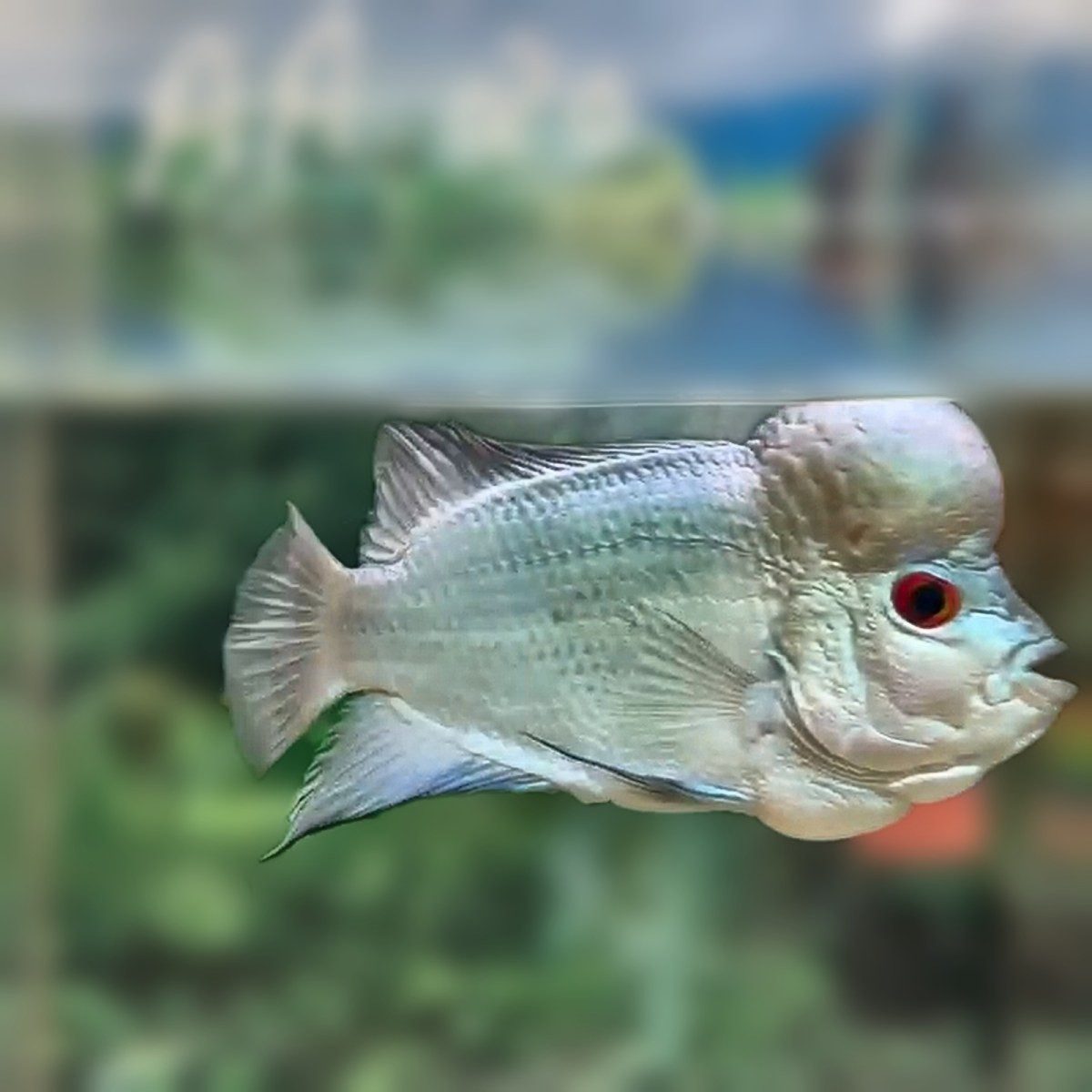
| Thai Silk | Thailand | A metallic, silky white-to-blue sheen, sometimes marketed as Titanium. Smaller kok; valued for its unusual color rather than head size. |
| Short body (“balloon”) | Various | A compressed, rounded body. Popular, but prone to swim bladder trouble and generally shorter-lived. |
You will also see Kamfa fish labeled F0 to F4. Those aren’t strains. They indicate generations away from the original Kamfa cross: F0 is the original, nearly infertile cross, F1 its direct offspring, and each later generation typically carries less of the original line and breeds more easily. Hobby terms like these are collected in the flowerhorn glossary.
Buying from a breeder
A few habits protect you when buying a young flowerhorn:
- Ask to see the parents, or photos of them as adults.
- Be wary of very small juveniles with unnaturally intense color and an early kok. Buyers are routinely warned that color can be pushed with feeds and may not last.
- Look for an active, curious fish that comes to the front of the tank. With flowerhorns, a bold attitude is a sign of health.
- Buy from a seller who will tell you what strain and generation you are getting, and who stands behind live arrival.
Our own flowerhorns ship nationwide from flowerhorn.co, and you can see them in person at Pet Zone in San Diego.
Questions about flowerhorn breeding
Are flowerhorns hard to breed?
Getting a spawn is achievable, but getting fertile eggs is the hard part, because many males are sterile. Raising quality fish is harder still, since most fry won’t develop the kok, color and pearling breeders want.
How many eggs does a flowerhorn lay?
A single spawn can be anywhere from about 500 to 2,000 eggs, laid on a flat stone or tile. They hatch in two to three days at around 82°F (28°C).
At what age does a flowerhorn develop its kok?
Most flowerhorns begin developing a kok between 6 and 12 months old. Genetics set the potential; warm, clean water, a high-protein diet and enough space help a fish reach it.
What is the best flowerhorn strain?
There is no single best. Kamfa is prized for head size and body shape, Zhen Zhu for pearling, Red Dragon for color, and Golden Base is a hardy, affordable choice for a first flowerhorn.
Sources
- Flowerhorn cichlid genetics and breeding, Gensou
- Origins of Kamfa F0–F4 lines, PNPV Fish House
- Flowerhorn cichlid, Wikipedia
- Fancying the Flowerhorn, Animal Scene