Strains
Zhen Zhu (ZZ) flowerhorns
The pearl flowerhorn is the workhorse of the hobby: bright, hardy, fertile and everywhere. Most red flowerhorns in American stores have ZZ somewhere in the family tree.
The pearl flowerhorn
Zhen zhu, 珍珠, is Mandarin for “pearl,” and the name says what the strain is prized for: iridescent spangles over the face, body and fins. In the hobby it is shortened to ZZ, and you will also see it spelled Zhen Zhou or Zen Zhu.
ZZ is one of the lines usually counted among the four founding flowerhorn varieties, alongside Kamfa, Golden Monkey and the Golden Base group. Accounts disagree on whether it came before or just after Kamfa. Breeders generally credit the trimac with much of its early ancestry, with later crosses bringing in more pearling and better markings. The line is associated with Malaysia first and, later, with Vietnam. As with all flowerhorn history, treat exact dates and recipes as hobby lore. The bigger picture is on our origins page.
ZZ has long been described as the most common flowerhorn in the United States, and ZZ-type fish remain the easiest flowerhorns to find. The reasons are practical: ZZ fish mature earlier, breed more readily and are more forgiving to keep than Kamfa.
How to recognize a ZZ
Next to a Kamfa, a ZZ is the longer, sportier fish. The differences show best in the face and the back half of the body.
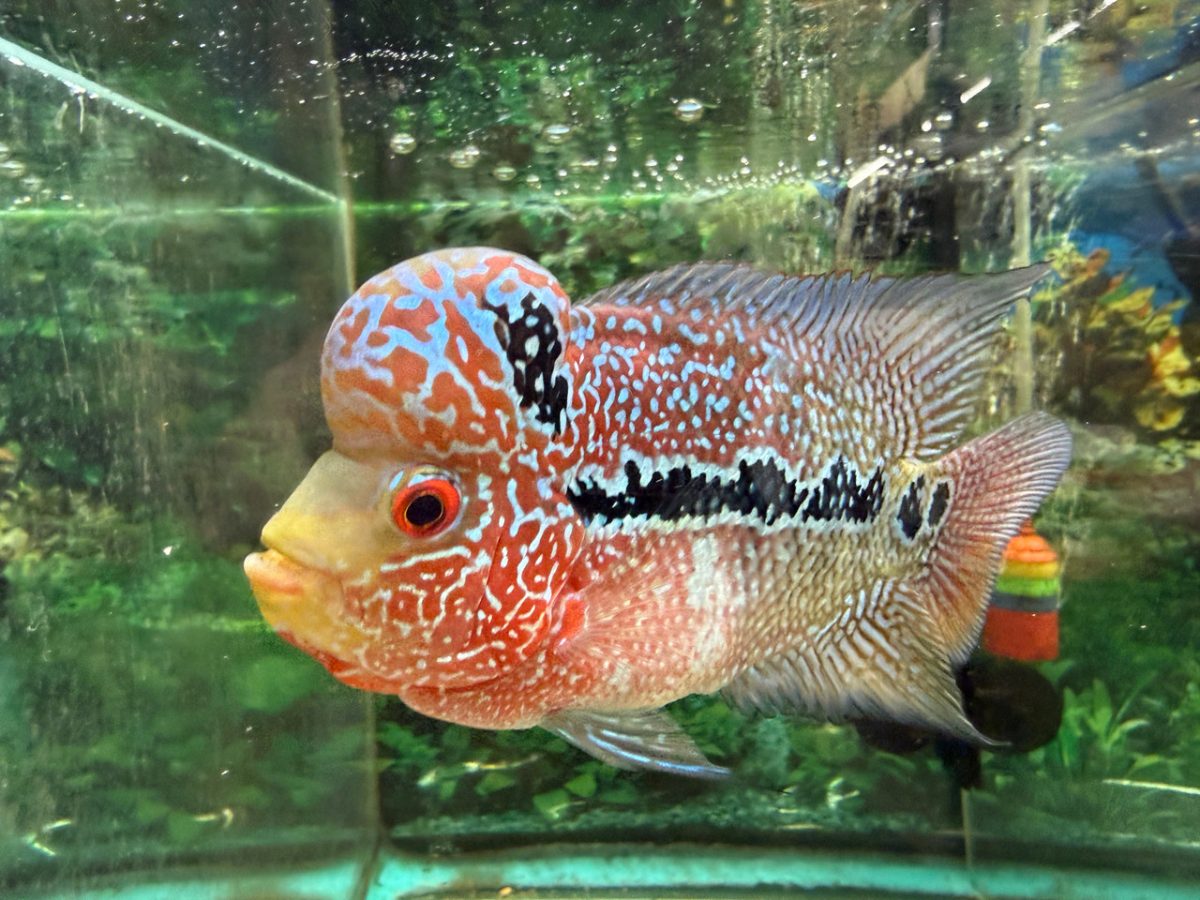
| Body | Egg-shaped to elongated, tapering toward the tail rather than square. |
|---|---|
| Mouth | A larger mouth, with the lower jaw usually extending past the upper lip. |
| Eyes | Red and bulging. |
| Face | Beaky to flat. Many have a head flower, and some show black marks around the eye that hobbyists call dragon tears. |
| Fins & tail | A rounded tail. Dorsal and anal fins do not wrap around it, and the tail can droop as the fish ages. |
| Flower | Single, double or even triple rows of black markings along the side. |
| Kok | Usually a firm hard head, smaller than a top Kamfa’s. |
| Pearling | From light to total coverage, most often blue-green or white. |
These are tendencies, not rules. ZZ varies a great deal between farms and regions, from fish with huge heads and weak fins to fish with hard heads, strong fins and deep red. The strains overview compares ZZ with every major line.
Signs of a ZZ
- Longer body that tapers to the tail
- Lower jaw sticks out past the upper lip
- Red eyes that bulge
- Rounded tail standing clear of the other fins
- Prominent head flower and flower line
Signs of Kamfa blood
- Square, deep body
- Even, rounded lips
- White, yellow or sunken eyes
- Dorsal and anal fins wrapping the tail
- A tall, softer kok
A fish with a mix of both columns is common, and usually means a cross. Plenty of excellent pets come from exactly that kind of fish; it just shouldn’t be priced as a pure line of either. More on the other side of that comparison in the Kamfa guide.
The hard head
ZZ lines are associated with the hard head, a firm kok built from denser tissue than the fluid-rich water head of many Kamfa. It rarely reaches the balloon size of a top water head, but it has a big advantage for a pet owner: it tends to hold its shape. A hard head is less likely to deflate after a move, a water change gone wrong or a stressful week.
That line has blurred over the years. Crosses have given some modern ZZ tall, soft heads that rival Kamfa, and some sellers now describe big ZZ koks as water-filled. If you want to know what you are getting, press the question with the seller and look at the fish under good light: a hard head looks solid, while a water head often looks slightly translucent.
Most males start building a kok between 6 and 12 months. Females grow a smaller one, so if head size matters, read up on telling males from females before you buy a young fish.
Pearling: what it is and how it develops
Pearling is the scatter of shiny spots over the scales, head and fins. It is generally attributed to light-reflecting cells in the skin (iridophores) rather than pigment, which helps explain why it catches light and changes with the viewing angle. On a ZZ it usually reads as blue-green, silver or white, and on a red fish it sits over the color like frost.
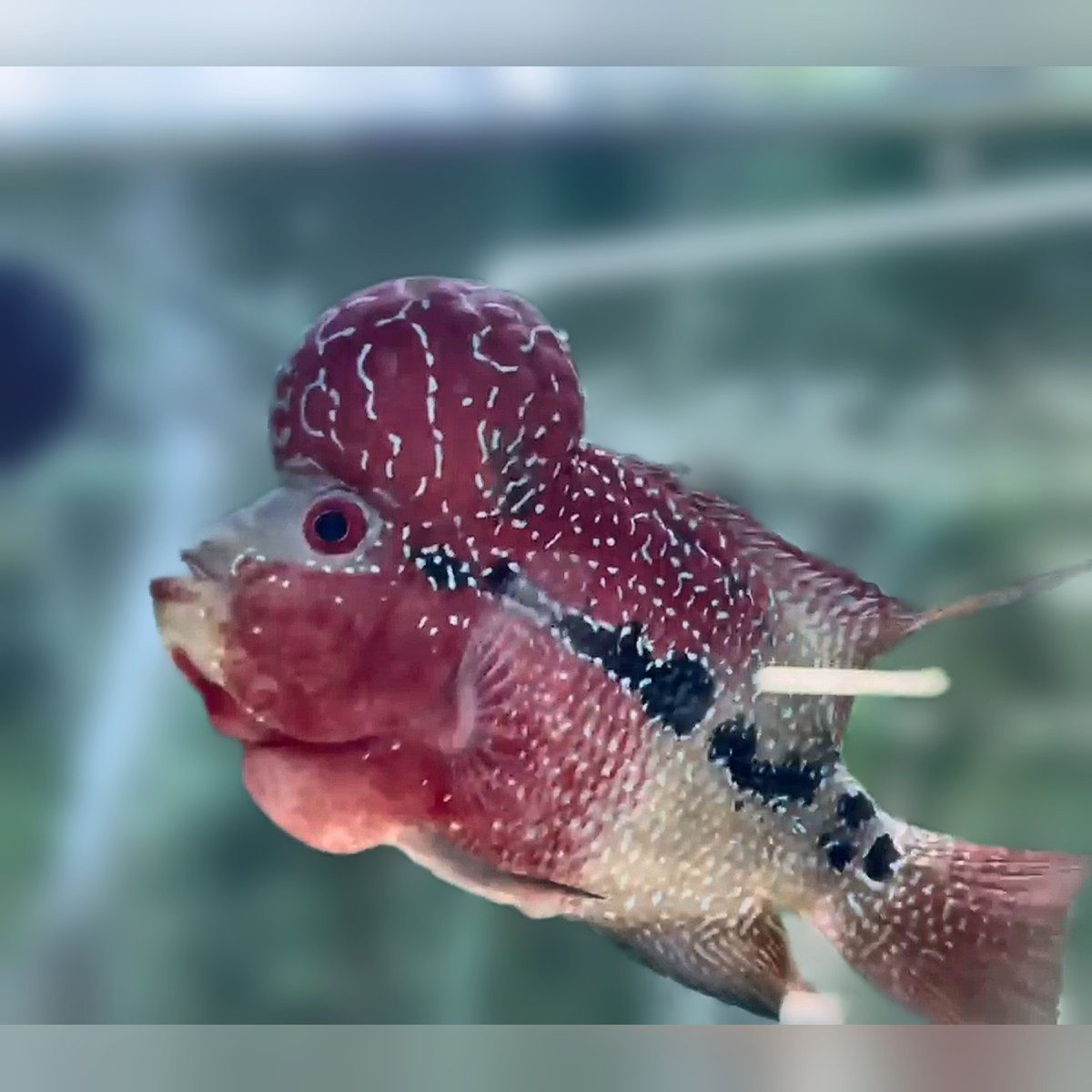
Breeders start judging pearls from around three months old, and coverage keeps filling in as the fish grows. When grading, look for:
- Coverage: how far the pearls extend over the body, head and fins.
- Density: close, even spots rather than a patchy scatter.
- Clarity: bright, clean pearls instead of dull or cloudy ones.
- Consistency: pearls that hold through the fish’s color changes.
Keepers point out that fading, the loss of black pigment in young fish, shouldn’t take the pearls with it. If pearls themselves are dulling, look at water quality and stress first. Our grading guide goes deeper on judging pearls alongside kok, flower and color.
ZZ variants and crossover names
Because ZZ breeds well, it is the base for more named lines than any other strain. That is also where the labels start stacking up.
- Red Dragon (RD): ZZ-type fish selected for red over the front of the body, with pearled sides. It is covered in its own Red Dragon guide.
- Super Red Dragon ZZ (SRD ZZ): the top color grade of Red Dragon on a ZZ body. “SRD” describes the red; “ZZ” describes the fish underneath. It is not a separate cross.
- Magma or Magfa: names used for ZZ-type fish where red and pearls break into a cracked, lava-like pattern. Spellings and definitions vary by seller.
- KML: short for Kamalau, usually described as a Kamfa and Malau cross, though some keepers describe KML lines built from Kamfa and ZZ Red Dragon. See Kamalau.
- ZZ in Kamfa lines: breeders cross Kamfa back to ZZ to restore fertility, then select the Kamfa-looking offspring. A red-eyed “Kamfa” is often read as a sign of ZZ blood.
A caution from the older hobby literature still holds: ZZ has spawned many sub-names that have little real difference behind them beyond marketing. If two fish look the same, the one with the fancier name is not a better fish.
Keeping and breeding a ZZ
ZZ fish don’t need special treatment beyond normal flowerhorn care, which makes them a common recommendation for first-time keepers. They are generally tolerant of small changes in water, eat eagerly and show their personality early. That doesn’t make them small or easy in the goldfish sense: an adult still needs a large tank of its own, strong filtration and steady warmth. Start with our care guide.
For breeders, ZZ avoid most of the fertility trouble that comes with Kamfa and reach maturity sooner, so pairs are easier to put together. The usual flowerhorn cautions still apply, starting with a divider. The breeding page covers the process.
Pet Zone keeps SRD ZZ flowerhorns in our San Diego store and ships them nationwide through flowerhorn.co.
Questions about Zhen Zhu flowerhorns
What does ZZ mean in flowerhorns?
ZZ stands for Zhen Zhu, Mandarin for “pearl.” It is one of the founding flowerhorn strains, known for heavy pearling, red bulging eyes and a firm kok.
Is SRD the same as ZZ?
Not exactly. SRD is a color grade, Super Red Dragon, and most SRD fish are ZZ-type underneath, which is why they are sold as SRD ZZ. An SRD Kamfa has the same color on a Kamfa body.
Do ZZ flowerhorns get a big kok?
Good males do, usually a firm hard head that holds its shape well. Top Kamfa water heads can grow larger, but ZZ heads are generally more stable.
Are ZZ flowerhorns good for beginners?
Yes, ZZ is one of the hardiest and most forgiving strains. Beginners still need a large solo tank, strong filtration and regular water changes.
Sources
- Breeding and strains: Zhen Zhou, Vincenzo’s Aquatics
- Zhen Zhu, Flowerhorn The Hybrid Cichlids
- 5 ways to differentiate between a Kamfa and ZZ, Flowerhorn Fish Craze
- Is KML the same as SRD?, MonsterFishKeepers
- Flowerhorn fish: complete guide on varieties, Guidarium
- Flowerhorn cichlid, Wikipedia