Care
Growing a flowerhorn kok
The kok is the first thing people look at and the thing new keepers worry about most. Most of its size is decided before you ever buy the fish. Your job is to let it reach that potential and keep it there.
What the kok is
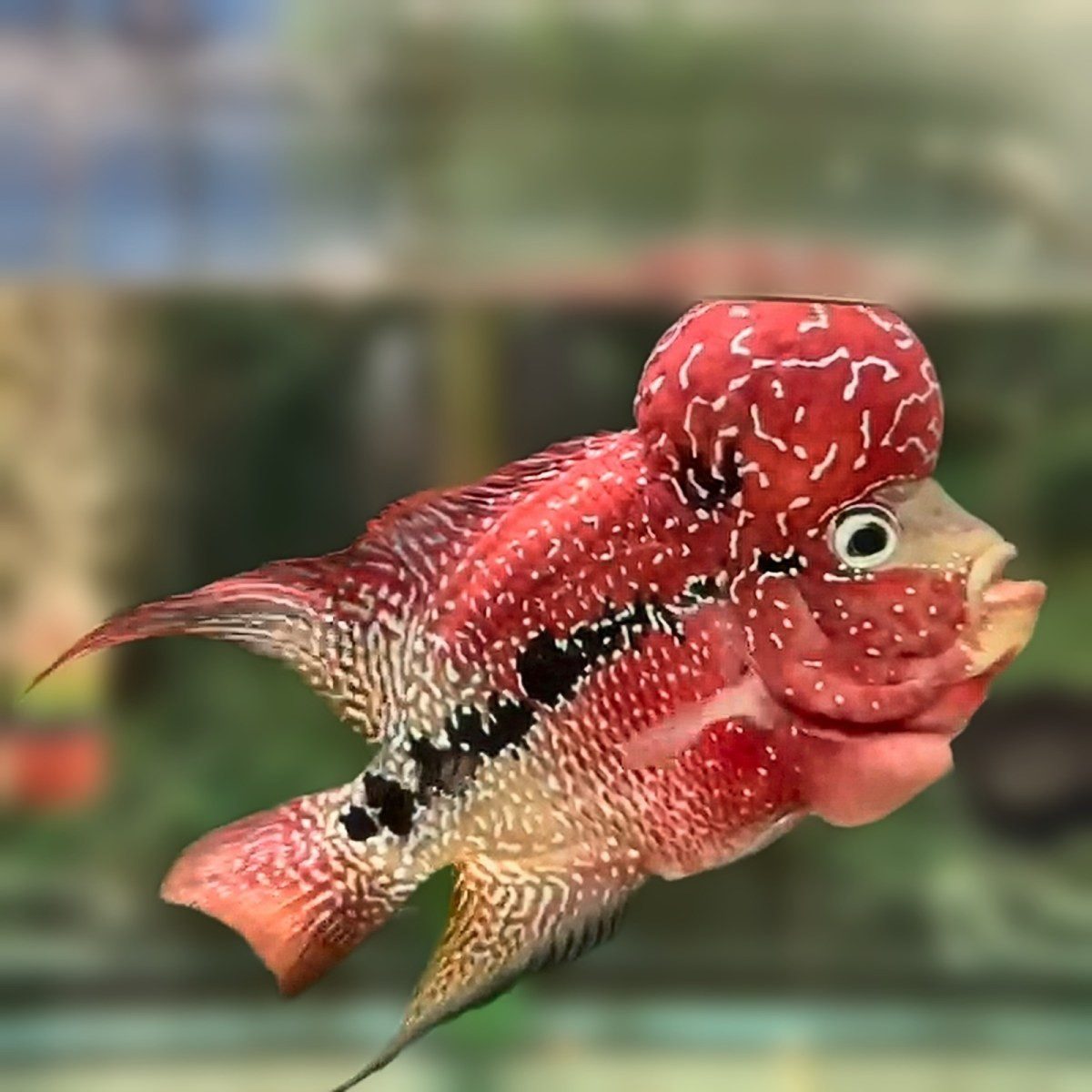
The kok (also called the head or hump) is the swelling on a flowerhorn’s forehead. Biologists call it a nuchal hump, and several of the flowerhorn’s Central American ancestors grow one, including the Midas cichlid. In the flowerhorn, breeders have pushed it far past anything seen in wild fish.
It isn’t bone and it isn’t a tumor. Research on the Midas cichlid (published in General and Comparative Endocrinology) described the hump as mostly fluid swelling of tissue under the skin, with some stored fat. In that species it rose before spawning, depended on hormones from the reproductive glands, and went down again during parental care. That lines up with what flowerhorn keepers see every day: a kok is living, changeable tissue that responds to the fish’s condition and mood.
Because a big, well-shaped kok is what sets the price of many strains, it also attracts more myths and more marketing than any other part of the fish.
Genetics set the ceiling, care decides how close you get
Breeders, sellers and experienced keepers agree on one point: genetics are the biggest factor in kok size. A fish from a strong Kamfa or large-kok Zhen Zhu line has the potential for a big head. A pet-grade fish from unknown parents may never grow more than a modest bump, no matter how well it is kept.
Care matters, but it works inside that genetic ceiling. Good water and food let a fish reach its potential and hold it. Bad water and stress keep it from getting there, and can shrink a kok that has already grown. No food, supplement or trick turns a small-headed fish into a show fish.
The care that helps is the same care that keeps any flowerhorn healthy:
- Stable warm water at 80–86°F (27–30°C), pH about 7.0–8.0, zero ammonia and nitrite, and low nitrate. See water and temperature.
- Room to grow. Plan on at least 75 gallons (284 L) for one adult. Setup details are in tank setup.
- A quality staple pellet in sensible amounts, not a pile of rich treats. Our feeding guide covers schedules by age.
- Low stress and daily interaction. A confident fish that patrols its tank and comes to the glass tends to show off more.
When the kok grows: an age timeline
Every line and every fish is different, so treat these as typical ranges, not deadlines. Late bloomers are common.
| Age | What to expect |
|---|---|
| Fry to 3 months | No real kok. Breeders grade on body shape, growth rate and early markings. |
| 3 to 6 months | Pearling and face shape start to show. Some high-grade juveniles, especially Kamfa types, show a small bump early. |
| 6 to 12 months | The main window. Most flowerhorns begin developing a kok here, and males often pull ahead of females. |
| 12 to 24 months | The kok usually keeps filling out as the fish nears adult size of roughly 12–16 inches (30–40 cm). |
| Adult | Size is mostly set, but the kok still rises and falls with mood, health and water conditions. |
If your fish is eight months old with no kok, don’t panic. If it is two years old, healthy and well kept, with no kok, the likely answer is genetics.
Water head vs hard head
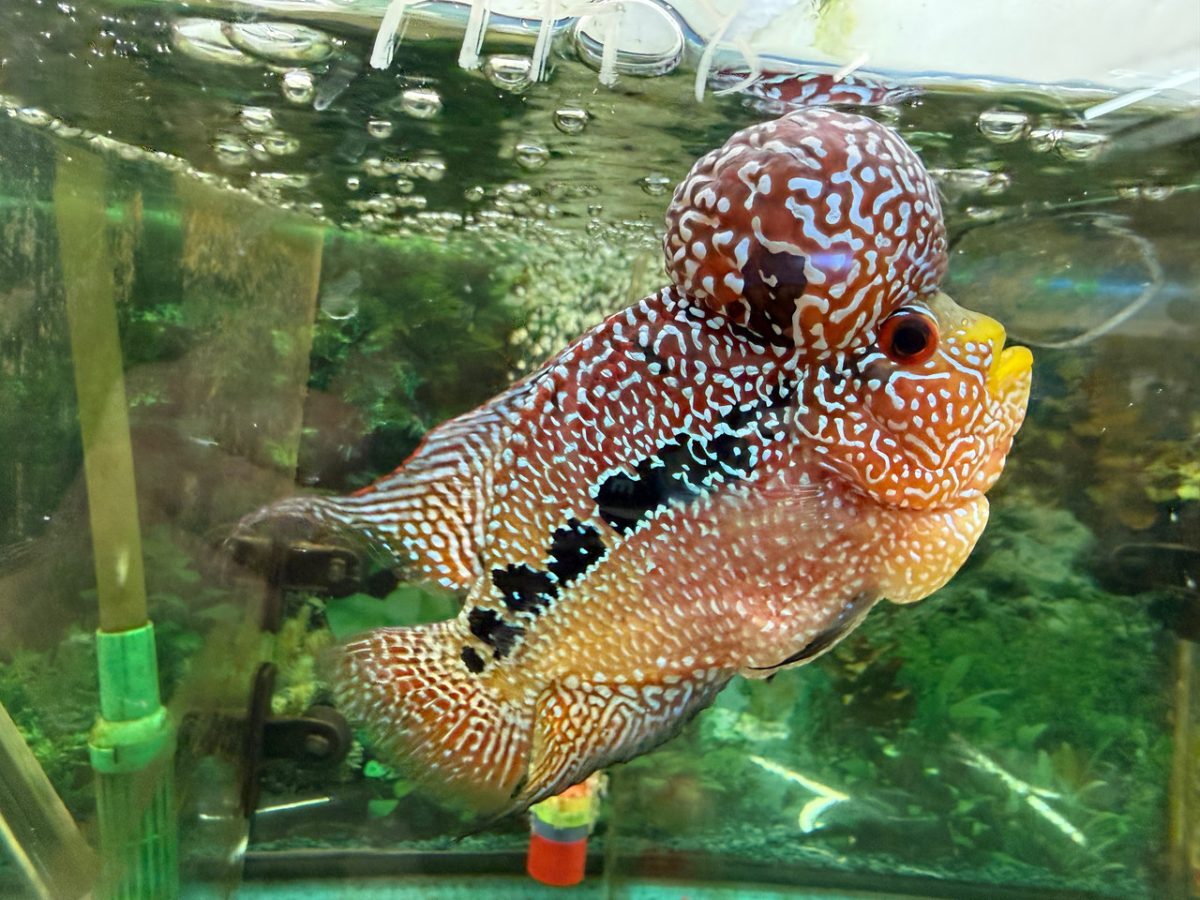
You will hear keepers and sellers describe koks as water kok (water head) or hard kok (hard head), with semi used for something in between. These are hobby terms, not scientific categories, and different sellers use them loosely. Some keepers see them as little more than branding. Still, the general pattern is useful when you are looking at fish.
| Water kok | Hard kok | |
|---|---|---|
| Look | Large, round, plump; often looks slightly translucent when backlit | Smaller, firmer, sits closer to the head profile |
| Described as | Soft, gel-like, “squishy” tissue | Denser tissue that holds its shape |
| Typical size | Usually the biggest heads | Usually modest |
| Day-to-day | Keepers commonly report more visible swings in size with stress or poor water | Tends to look steadier |
A water kok is the look most buyers want, but it is also the kind that shows problems fastest. That is not a flaw so much as an early warning system. If a big water head starts to sag, check the water before anything else.
Why a kok shrinks
A shrinking kok is one of the most common worries we hear about. In most cases it is a symptom of something else, and in most cases it comes back once the cause is fixed.
- Shipping and moving. Nearly every flowerhorn arrives with a deflated head after being bagged, boxed and dropped into a new tank. Give it a few weeks of stable water before judging. See shipping and acclimation.
- Water quality. Ammonia, nitrite, high nitrate or a temperature drop show up in the kok quickly.
- Stress. A new tank, rearranged decor, a tank mate, a busy spot with people banging on the glass, or a fish that has lost a fight through a divider.
- Illness. Parasites, bloat and infections drain condition. A kok that shrinks along with dark color, clamped fins or poor appetite belongs on our diseases page.
- Breeding. Keepers often see head size change around spawning, which fits what research found in the Midas cichlid.
- Age and diet. Very old fish and fish kept on poor or stale food often lose condition, and the head goes with it.
Kok myths: foods, hormones and mirrors
“Kok-boosting” foods
Many flowerhorn pellets are sold as head or kok formulas. A good high-protein pellet supports growth, so a quality product can help a fish reach its potential. What no food can do is add kok the fish was never going to grow. Stuffing a flowerhorn with rich treats like shrimp, krill and bloodworms to push the head tends to backfire: more waste, worse water, more bloat, and a kok that suffers for it. Feed a staple pellet, use treats sparingly, and rotate brands if you like.
Hormones
Hormone use has long been an ethical concern in the ornamental cichlid trade, including flowerhorns, mainly for pushing color and early development in young fish sold for a quick profit. We don’t recommend hormone products of any kind for a pet fish. The evidence that they create a lasting, healthy kok is not there, and buyers are routinely warned that juveniles with unnaturally intense color and an early head may not hold that look. If a product promises dramatic results in days, walk away.
Mirrors
Some keepers hold a mirror to the glass for a few minutes so the fish flares at its reflection. It does make a flowerhorn puff up, color up and look bigger for a while, and keepers debate whether regular short sessions help development. What is widely agreed is that overdoing it causes stress, and stress shrinks a kok. If you use a mirror at all, keep it brief and occasional, and never leave one in the tank.
Setting realistic expectations
If kok size matters to you, the most important decision is made at purchase. Look at the parents or photos of them, buy from a seller who knows the line, and understand that a juvenile is always partly a bet. How judges and buyers read head shape, pearling and color is covered in grading, and strain differences are in our strains guide.
After that, keep your side of the deal: stable water, sensible feeding, space and low stress. Expect most growth between 6 and 12 months with filling out afterward, expect temporary dips after moves and upsets, and judge the fish on how it looks after it has been settled for a while. If you want to start with a fish that already shows its head, you can see what is available at flowerhorn.co.
And keep perspective. A small-headed flowerhorn still has the personality, the greeting at the glass and the decade-plus lifespan that make these fish worth keeping. More on that side of the hobby is in the flowerhorn as a pet, and the rest of our care guides are collected in the flowerhorn care guide.
Questions about flowerhorn kok growth
At what age does a flowerhorn grow its kok?
Most flowerhorns begin developing a kok between 6 and 12 months old, and it usually keeps filling out into the second year. Some high-grade juveniles show a bump earlier, and some fish are late bloomers.
Why is my flowerhorn’s kok getting smaller?
The usual causes are stress, poor water quality, a recent move or shipping, illness, or breeding. Test the water, fix any problems and give the fish a few stable weeks; in most cases the kok recovers.
Can food make a flowerhorn’s kok bigger?
A quality pellet helps a fish reach its genetic potential, but no food adds kok the fish was not going to grow. Overfeeding rich foods to push the head often causes bloat and poor water, which can shrink it.
Do mirrors help a flowerhorn grow a kok?
A mirror makes a flowerhorn flare and look bigger for a short time, but there is no good evidence it builds lasting kok size. Overuse causes stress, so keep any sessions brief and never leave a mirror in the tank.
What is the difference between a water kok and a hard kok?
A water kok is large, soft and round, while a hard kok is smaller and firmer. They are hobby terms rather than scientific ones, and sellers use them loosely.
Sources
- Hormonal control of the nuchal hump in the cichlid fish Cichlasoma citrinellum, General and Comparative Endocrinology
- The truth about flowerhorn kok/head growth, MonsterFishKeepers
- Water kok and hard kok, MonsterFishKeepers
- Breeding and strains: types of kok, Vincenzo’s Aquatics
- How to improve the growth of my flowerhorn’s hump, Intan Aquarium Feeds
- Flowerhorn cichlid, Wikipedia